


Osafune, in Setouchi City, Okayama Prefecture , is a mecca for Japanese swords, having flourished as a sword-making center for about 800 years. Approximately half of the important Japanese swords that still exist today were made here. We will introduce the charms of the Bizen Osafune Japanese Sword Museum , where you can observe the skills of swordsmiths up close and which also houses the National Treasure " Sanchomo (National Treasure Sword) ."
2026.01.15The Osafune region of Setouchi City City, Okayama Prefecture , is a mecca for Japanese swords, having flourished as a sword-making center since the early Kamakura period. Surprisingly, about half of the important Japanese swords still in existence were made in Osafune. The Okayama Sengoku Busho-tai will introduce you to the charms of the Bizen Okayama Bizen Osafune Japanese Sword Museum , which attracts sword fans from all over the world. Don't miss the information on nearby sword goods shops.
-
Table of Contents
- Why Bizen Osafune is known as the "home of swords"
- What is the Bizen Osafune Japanese Sword Museum? The appeal of a museum specializing in Japanese swords
- Learn the basics at the Information Corner: World of Japanese Swords"
- 1st floor exhibition room: Learn about the history of Osafune swords through the real thing
- 2nd floor exhibition room: Learn more about Japanese sword culture through a variety of special exhibits
- National Treasure "Tachi Unmei Ichimonji (Sanchomo (National Treasure Sword))": A famous sword beloved by Uesugi Kenshin
- Observe the craftsmanship up close at a Sword Workshop: How a Japanese sword is made
- Swordsmith (artisan who forges swords)
- Silversmith (metal decoration craftsman)
- Swordsmith (decorative metalwork craftsman)
- Sword sharpener (artisan who sharpens swords)
- Handle winder (a craftsman who winds thread around the handle)
- Scabbard maker (artisan who makes the sheath)
- Lacquer artist (a craftsman who applies lacquer)
- A powerful demonstration of Traditional Sword Forging
- Imaizumi Toshimitsu Swordsmith Memorial Museum: A person of merit who contributed to the revival of Bizen swords
- Sword souvenir shop: Special items you can only buy here
- Summary: A unique place where you can experience everything about Japanese swords
Why Bizen Osafune is known as the "home of swords"
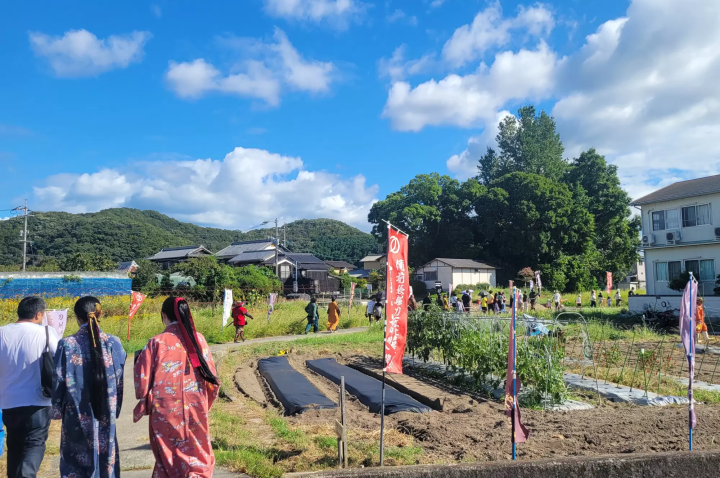
Sword making became popular in Bizen Province (present-day eastern Okayama Prefecture) from the end of the Heian period (approximately 900 years ago), and a group of sword artisans known as "Ko-Bizen School" emerged. It is believed that sword making also began in the Osafune area around this time.
In the early Kamakura period, a group of swordsmiths called the " Fukuoka Ichimonji School " was born in the Fukuoka area of Fukuoka . In the late Kamakura period, a group of swordsmiths called the "Osafune School" emerged, and reached their peak as the demand for swords increased sharply due to the succession of wars.
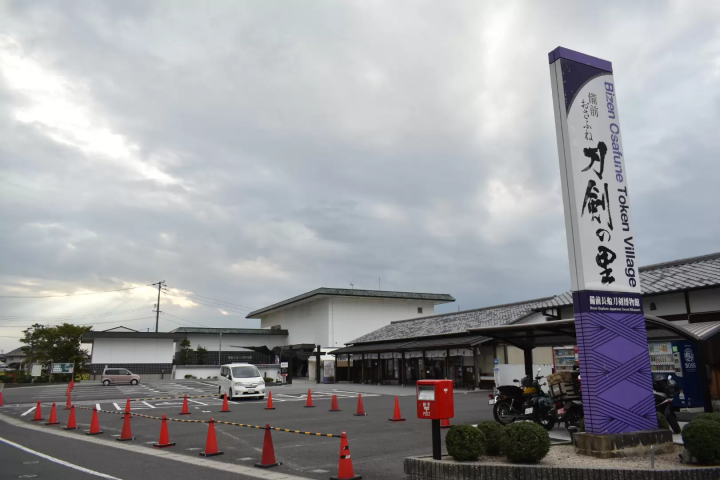
Even during the Muromachi period (1336-1573), wars continued, requiring a large number of swords, and Osafune began mass production using a division of labor. As a result, many high-quality masterpieces and swords for practical use were produced. When the wars subsided, the demand for swords for actual combat decreased, and sword production in Osafune also declined.
In this way, the Osafune region is a sword village that has reached the pinnacle of both the quantity and quality of Japanese swords, and has continued to be the center of Japanese sword production for hundreds of years.
What is the Bizen Osafune Japanese Sword Museum? The appeal of a museum specializing in Japanese swords
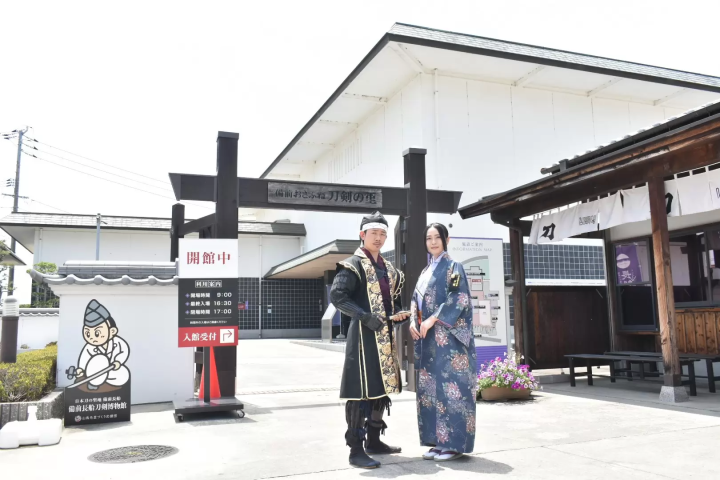
A rare museum specializing in the display of Japanese swords
The Bizen Osafune Japanese Sword Museum is a rare museum in Japan that specializes in displaying Japanese swords. In addition to viewing the sword exhibits, there is also an exhibition corner where even beginners can deepen their knowledge of swords in an easy-to-understand manner.
Furthermore, you can observe the resident swordsmiths at work in the sword forge (sword-making workshop) on the premises. This is a comprehensive sword museum that can be enjoyed with all five senses - seeing, hearing, touching, and experiencing. Now, let us introduce the highlights of the museum.

Learn the basics at the Information Corner: World of Japanese Swords"
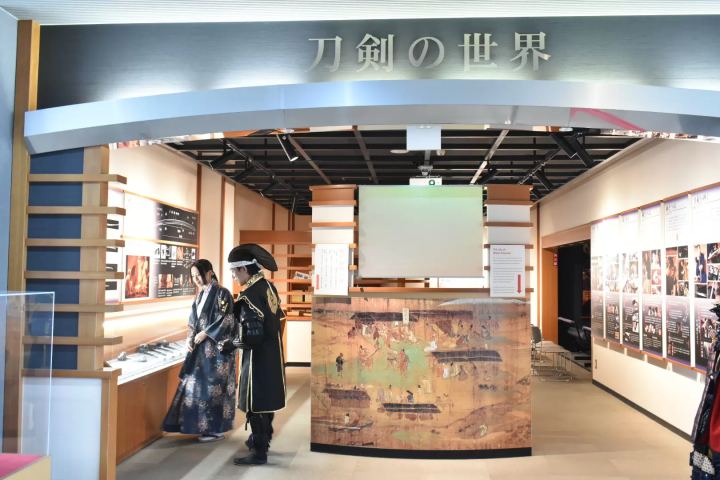
After entering the museum and purchasing your ticket at the ticket counter in front, head to the Information Corner: World of Japanese Swords." Here, you'll find an easy-to-understand explanation of how swords are made, starting from the very beginning.
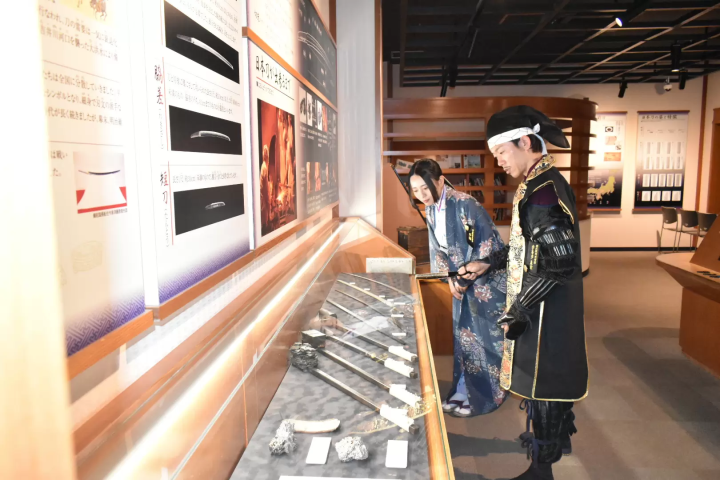
Questions like "How are swords made?" and "Where should I look?" are answered in an easy-to-understand manner through videos and panels. If you are a first-time visitor, you can deepen your understanding by first learning about the mechanics of swords and then seeing the real thing. Once you have gained some background knowledge, it's time to go and see the real swords.
1st floor exhibition room: Learn about the history of Osafune swords through the real thing
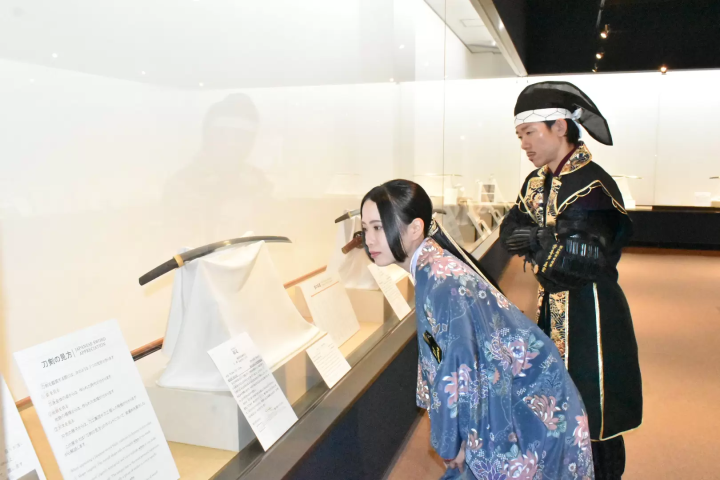
If you look to the left after entering the entrance, you will see a room where real swords are displayed.
Swords made by representative swordsmiths active in Osafune are on display, and you can learn about the history of Osafune swords, including the characteristics and eras of the swordsmiths, while looking at the actual swords. There are also explanations on how to appreciate swords and how to read the blade pattern (the pattern that appears on the blade), so even those seeing a sword for the first time will be drawn into the world of Japanese swords.
2nd floor exhibition room: Learn more about Japanese sword culture through a variety of special exhibits
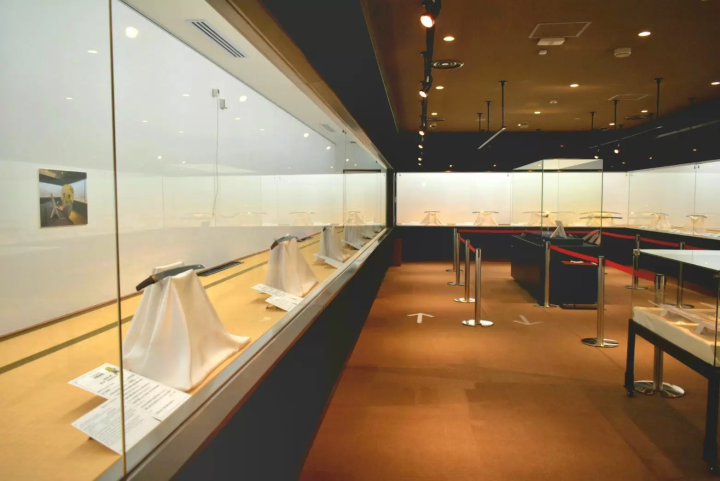
The Bizen Osafune Japanese Sword Museum hosts a variety of special exhibitions throughout the year, showcasing the appeal of Japanese swords from various angles.

Past special exhibitions have included explanations of academic sword terminology, an exhibition of Akabane swords (Japanese swords confiscated after the war), collaborations with anime and games such as Evangelion, Sengoku BASARA, and Touken Ranbu, and a collaboration with Funassyi. These exhibitions aim to delve deeply into the historical background, techniques, and cultural significance of swords, and there is always something interesting to see.
National Treasure "Tachi Unmei Ichimonji (Sanchomo (National Treasure Sword))": A famous sword beloved by Uesugi Kenshin
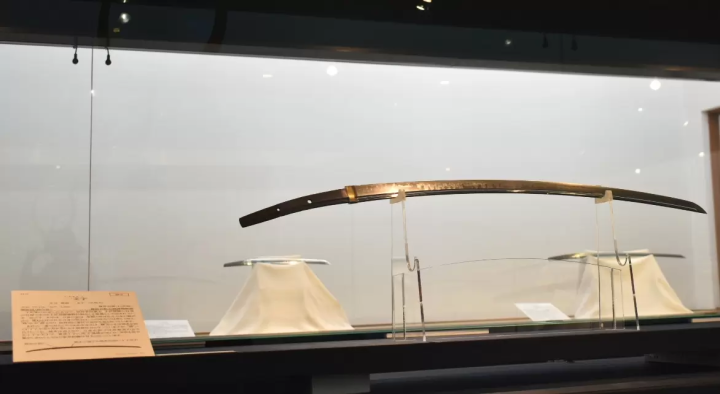
One thing that should not be forgotten is the national treasure "Tachi Mumei Ichimonji ( Sanchomo (National Treasure Sword) /Sanchomo)" owned by the Bizen Osafune Japanese Sword Museum .
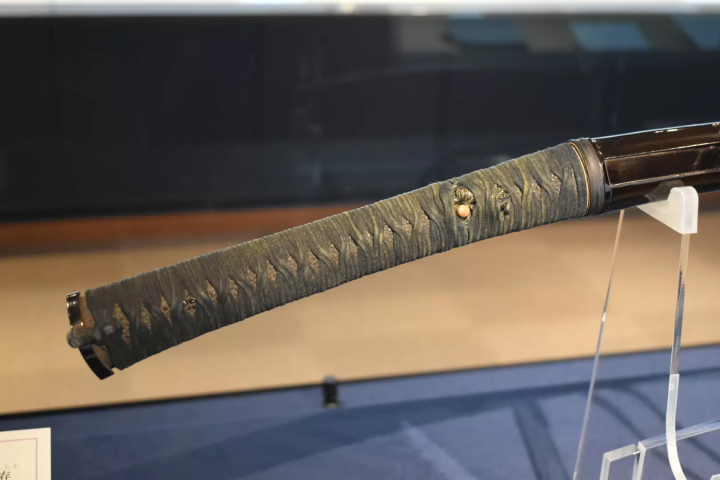
This sword is said to have been made by a swordsmith of the Fukuoka Ichimonji School , who was active in Fukuoka, Bizen Province, in the mid- Kamakura period (approximately 750 years ago), and is known as the beloved sword of Uesugi Kenshin and his son Kagekatsu, famous warlords of the Sengoku period (1467-1590). It was purchased by Setouchi City, and has been on public display about once a year since March 22, 2020. The next public display is scheduled for March 2026.
Once you see the real thing, you will surely be captivated by the beautiful blade pattern that resembles the feathers of a mountain pheasant.
Observe the craftsmanship up close at a Sword Workshop: How a Japanese sword is made
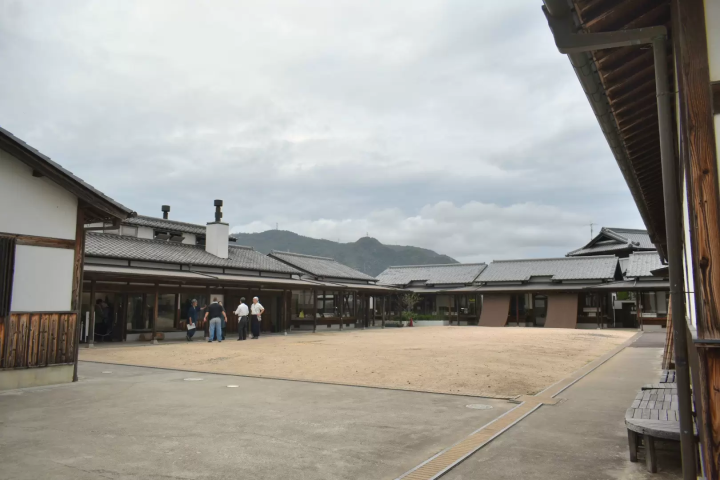
The Bizen Bizen Osafune Sword Village Bizen Osafune Japanese Sword Museum is located, also has a Sword Workshop. You can observe craftsmen at work in each stage of Japanese sword making, including swordsmiths (artisans who make swords), silversmiths (artisans who decorate metal), metalworkers, sharpeners (artisans who sharpen swords), scabbard makers (artisans who make sheaths), lacquers (artisans who apply lacquer), and handle wrappers (artisans who wrap thread around the handle). We will introduce each stage and the craftsmen involved.
Swordsmith (artisan who forges swords)
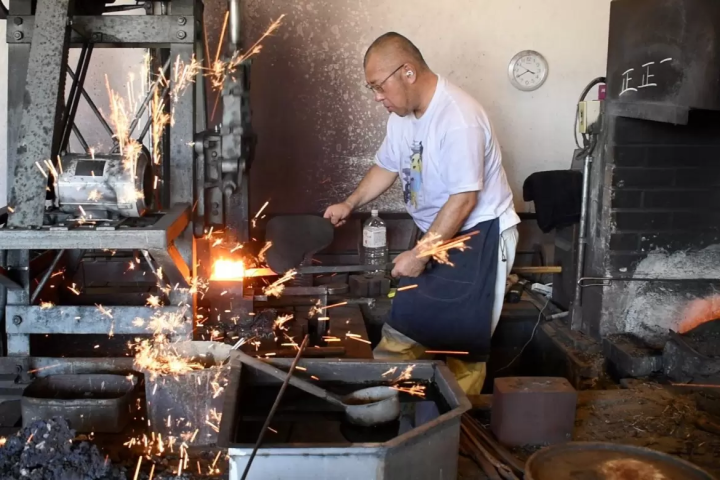
A swordsmith is a specialist who creates Tamahagane (Japanese steel) from tamahagane (steel used to make Japanese swords) obtained through tatara iron smelting, hardening it, sharpening it, and engraving the name.
Swordsmith Hiroyasu Ando is on-site, and you can observe the entire process of forging a Japanese sword up close. Ando is a swordsmith who has won numerous awards at contemporary swordsmith exhibitions.
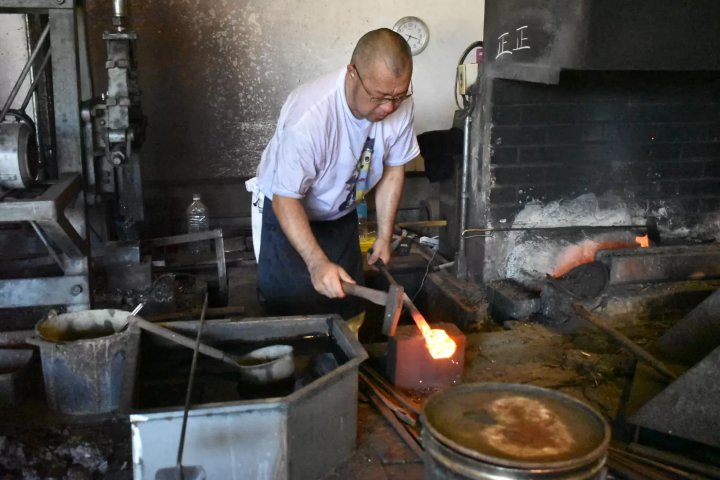
As we spoke, he revealed that the hardening process is the most nerve-wracking time, as it determines whether the making of a Japanese sword will be successful or not. He said that he has yet to make a sword that he is satisfied with, and that he devotes his days to research. However, he said that he enjoys every step of the process. Although swordsmith Ando may appear strict at first glance, he is actually a very kind and friendly person, so if you visit the museum, try talking to him. You may be able to hear all kinds of stories about sword making.
Silversmith (metal decoration craftsman)
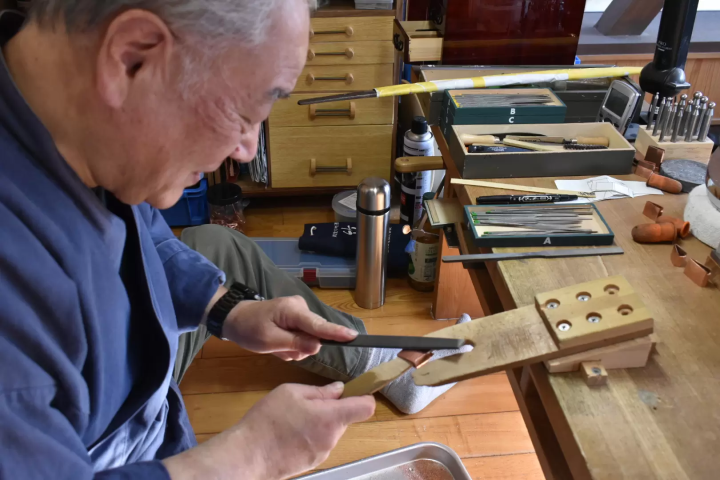
"Shirogane" refers to silver or metal, and these artisans are primarily responsible for the metal parts of the exterior of a sword (the decorative part of the sword called koshirae), and they create the decorative metal fittings and reinforcing parts for the sword. Without a Shiroganeshi, the sword would "not fit into its sheath, and would lack the practicality and decorative beauty of a weapon."
Two people, resident resident Takeshi Muto and regular exhibitor Satoshi Koike (pen name: Shigeyuki), will be showing off their work to the public.
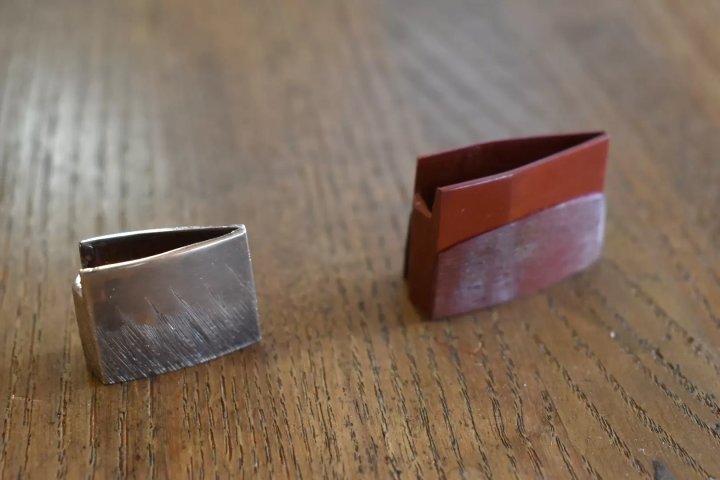
We spoke with Mr. Muto, who said, "We silversmiths work with metals other than iron. We make not only the habaki (metal fittings that secure the blade), but also the fuchi (edge), kashira (head), menuki (menuki), kojiri (tsuba), and seppa (facetings). We are always thinking about how to meet the client's requests as we work, which is what makes it so interesting." Mr. Muto is a very good talker, and his stories about swords, as well as metalwork, were very interesting.
Swordsmith (decorative metalwork craftsman)
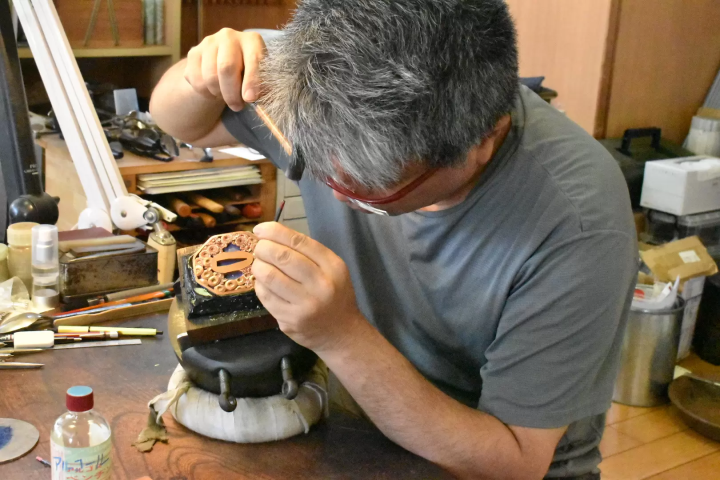
They are decorative metalwork artisans who make metal fittings such as tsuba (the disc-shaped protective piece between the handle and the blade of a sword), fuchi-gashira (the edge of a sword), and menuki (the tsuba). They also use techniques such as inlay (a technique of carving grooves in metal and fitting other metals into them), and their work has a strong element of fine arts and crafts. Craftsmen who carve into the blade of a sword to give it religious or artistic value are called metalworkers.
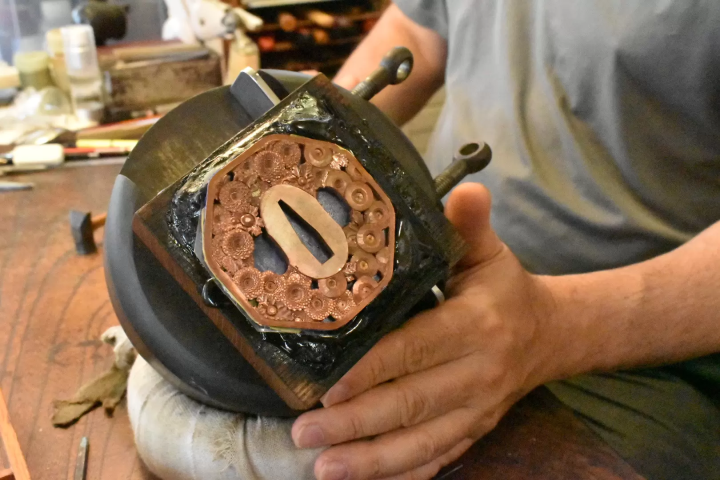
Resident swordsmith Shigetsune Katayama is on hand to show his work. He said, "I came to Okayama with the aim of becoming a swordsmith, but when I saw my master's blade engravings at the Bizen Osafune Japanese Sword Museum, I was so impressed that I learned about swordsmithing and decided to enter this world. I would like to create something completely new, such as a new design."
He had a sketchbook in his hand, filled with new designs for blade engravings and tsuba (guards). If you'd like to try your hand at metal engraving yourself, talk to Katayama directly. He also holds classes for beginners here.
Sword sharpener (artisan who sharpens swords)
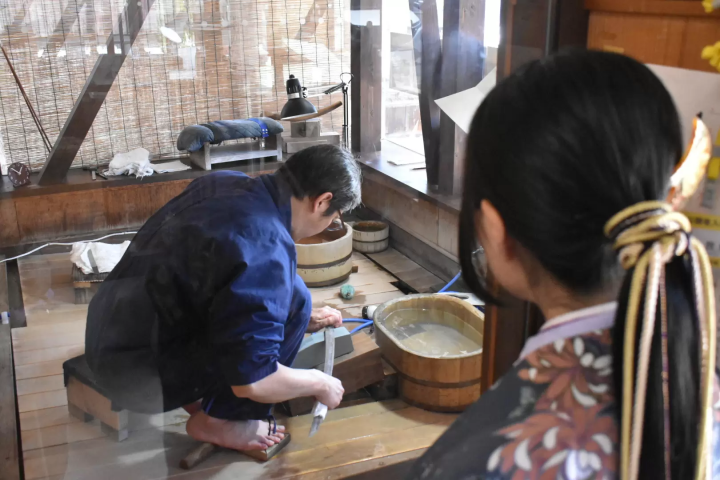
This is a specialized job that involves polishing (honing) Japanese swords to make them look beautiful and accurate. When a sword forged by a swordsmith is left as is after quenching, the blade is whitish and cloudy, and the blade pattern and surface are not clearly visible. However, by finishing the blade, the beauty of the blade pattern and surface steel is highlighted, and the true nature of the sword is revealed. From a practical standpoint, sharpening the blade also improves its sharpness.
Two masters, Tomoyoshi Yokoyama and Takayuki Yasui, hold regular exhibitions.
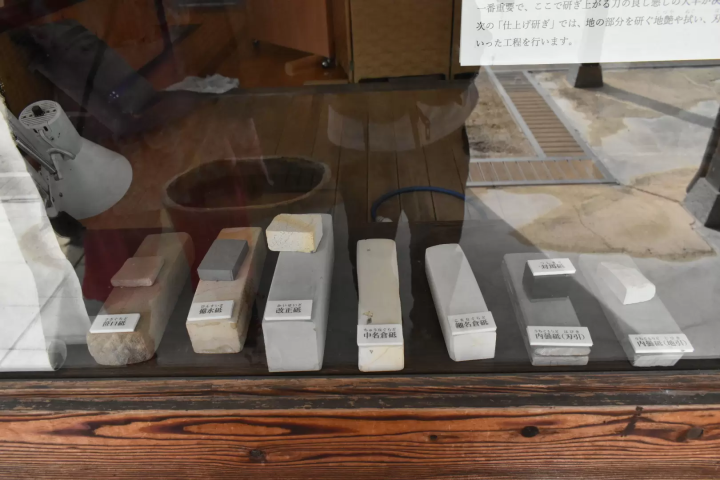
When I spoke to Yokoyama, he told me, "We receive a variety of swords, from modern swords made by swordsmiths to swords that need to be resharpened. When resharpening, it's no good to sharpen the sword too much, so we revive the sword with minimal sharpening." He also has many different types of whetstones, from coarse to fine, and uses them for different sizes. It seemed like a job that required a lot of attention to detail.
Handle winder (a craftsman who winds thread around the handle)
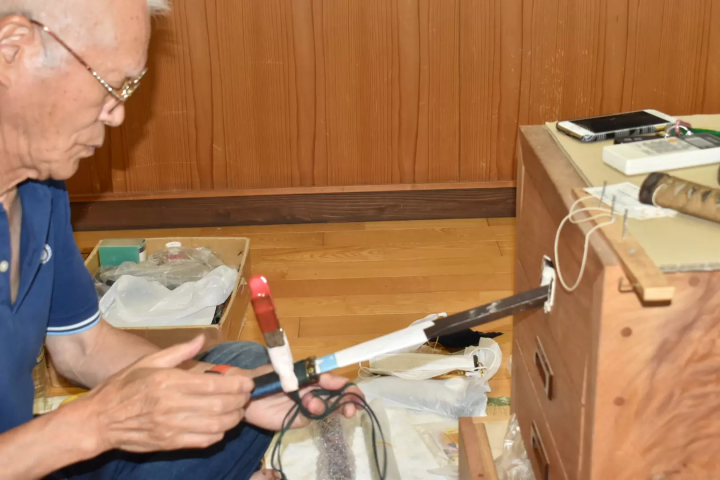
A tsukamakishi is a craftsman who creates the exterior of a sword, wrapping thread and leather around the handle (the part of the sword that is held by the hand) of a Japanese sword. This not only makes the handle beautiful, but also plays an important role in ensuring its practicality and durability.
Mr. Nobuo Takami is a handle wrapper who regularly shows off his work to the public. He started his career in 1988.
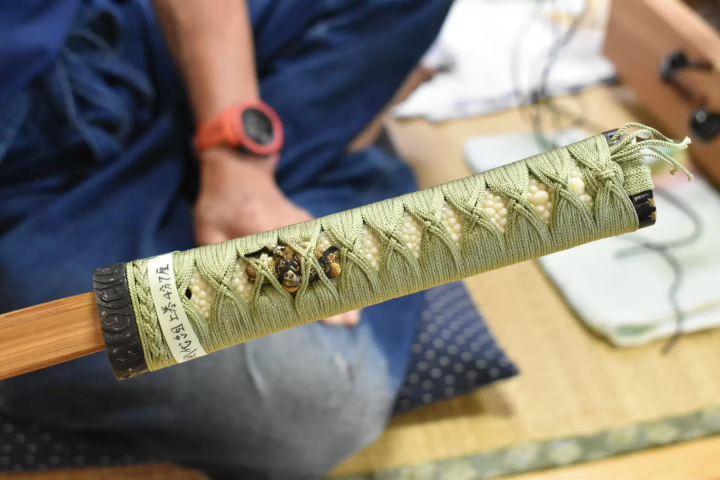
It's not just a matter of twisting and wrapping a wide, flat string, but if you look closely you'll see that it's actually a braid of many thin strings. The intersections are very intricate and beautiful, and the washi paper is stuffed inside so it's not visible from the outside. This makes it very comfortable to hold, and the handle fits comfortably in your hand. It's a true work of art, with attention paid to even the invisible parts.
Scabbard maker (artisan who makes the sheath)
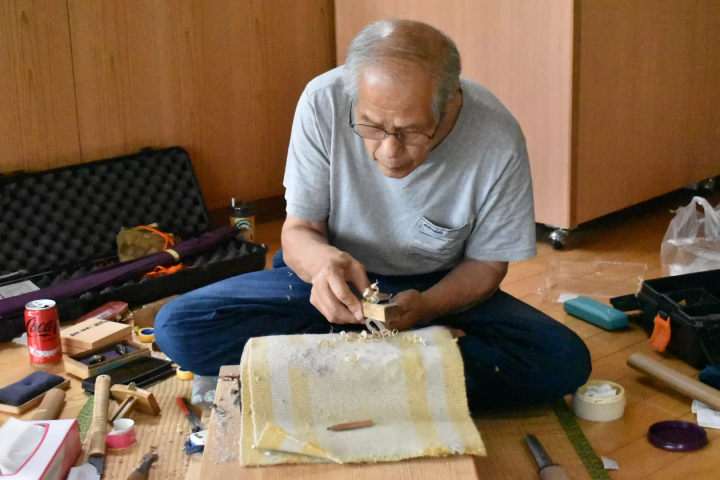
A scabbard maker is a craftsman who specializes in making sheaths (cylindrical cases for swords) for Japanese swords. Of all the components that make up a sword, the sheath is essential for protecting and carrying the sword, and also has a major impact on the aesthetic appearance of the sword.
The internal structure must be carved out to fit the blade perfectly and hold the sword securely. It is also important that it harmonizes with the metal fittings, such as the koiguchi (the opening in the sheath where the sword is inserted), the kurigata (the protrusion for passing the sword through the obi), and the kojiri (the metal fitting at the end of the sheath).
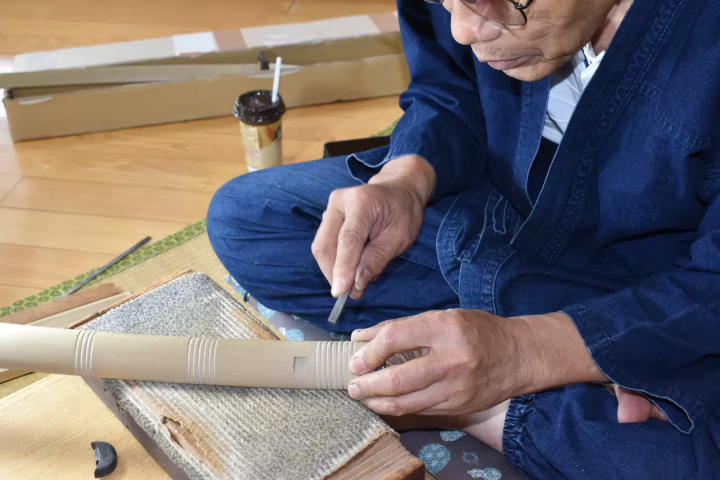
Mr. Ishizaki Saburo regularly opens the exhibition to the public. Mr. Ishizaki has been studying under his master since 1969, and is a craftsman who has dedicated himself to making swords using scabbards and has received numerous awards.
We spoke to Ishizaki, who told us, "The scabbard is made from magnolia. It's an easy wood to work with, but it can only be used after it's been left to rest for about 10 years after being cut down. In order to hold the sword securely, it's very important to carve out the internal structure that fits the blade perfectly, and we take great care in this process."
Lacquer artist (a craftsman who applies lacquer)
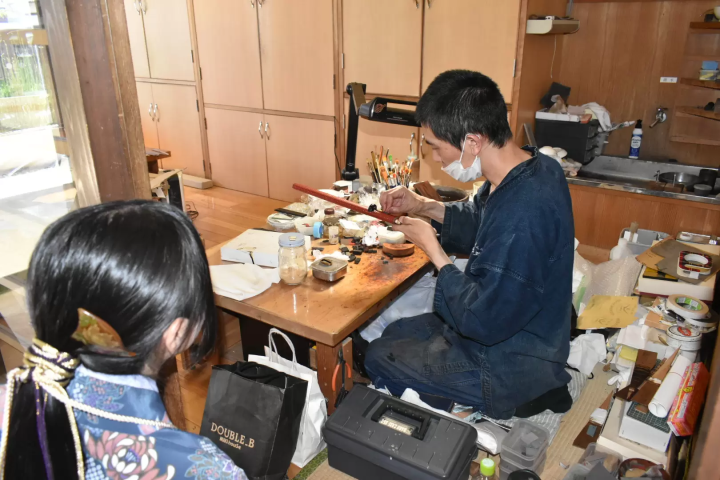
Nurishi are craftsmen who mainly finish the surface of scabbards and sword fittings with lacquer (a traditional Japanese natural paint), and are one of the most important craftsmen in the production of Japanese swords.
Currently, Teruhito Kishino is the museum's resident lacquer artist, and is open to the public as he works.
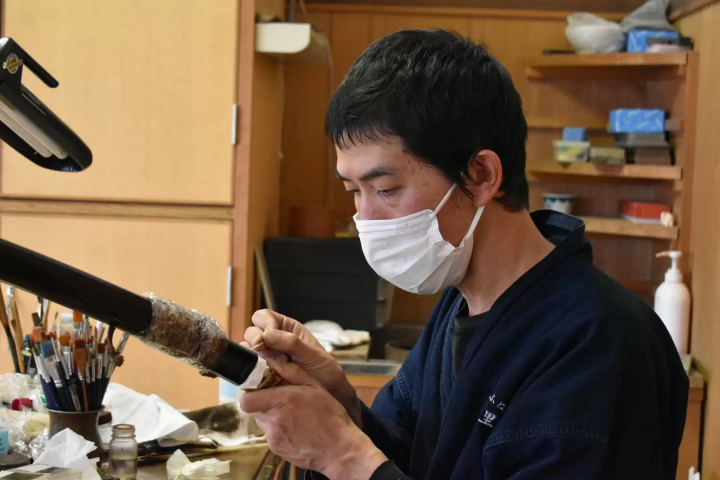
When asked about the work of a lacquerer, he said, "There are about 50 steps in the process of applying lacquer to a scabbard. It is a repeated process of applying lacquer, polishing, applying lacquer, and polishing. It is not just about applying lacquer; we first discuss in detail with the scabbard maker the thickness of the lacquer depending on the part before starting work. It is also important to finish the scabbard so that the shape of the scabbard made by the scabbard maker is not altered even in the smallest details by the thickness of the lacquer."
When applying the lacquer and when it is drying, great care is taken to prevent dust from getting on the scabbard. If you happen to come across someone applying the lacquer, please be careful not to raise any dust.
A powerful demonstration of Traditional Sword Forging
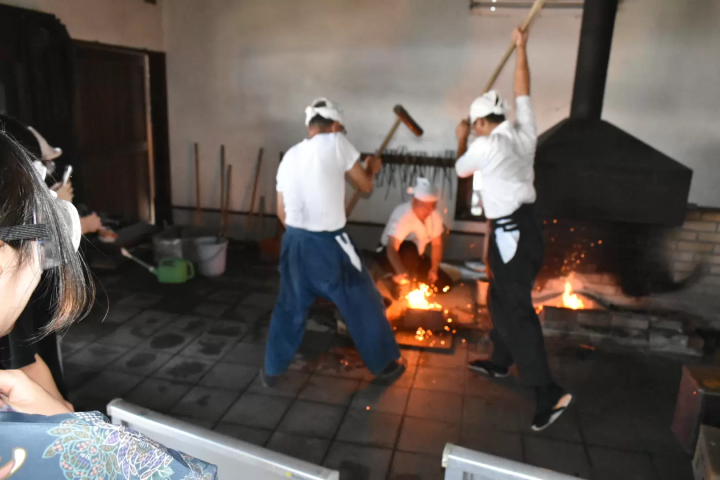
"Traditional Sword Forging" refers to the traditional techniques and processes used in the production of Japanese swords, in which steel is heated to high temperatures and hammered with a Otsuchi to form the desired shape (stretching, folding, etc.).
In particular, it is an important part of refining the internal structure of the blade, eliminating impurities, and increasing the homogeneity of the steel, in order to create a strong, flexible, and sharp sword.
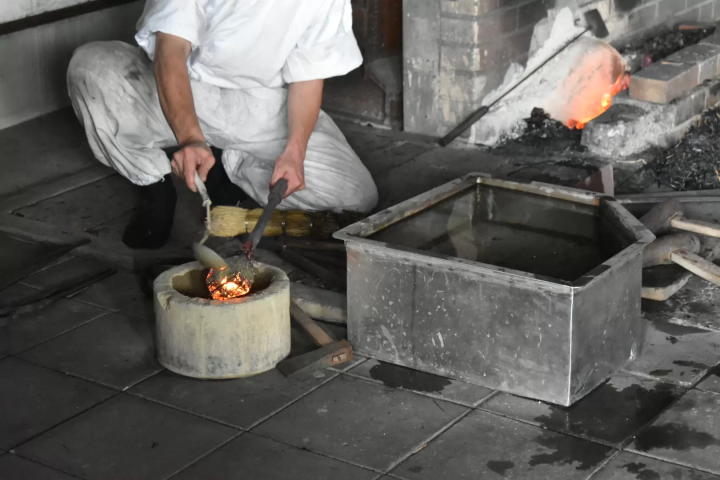
Once a month on the second Sunday, swordsmiths take turns demonstrating the "origaeshi forging" technique. When they raise Otsuchi and strike the iron, sparks fly, creating a spectacular sight!
To visit, you must make a reservation, enter the Bizen Osafune Japanese Sword Museum, check in, and wear the protective glasses provided. The swordsmith will also give an explanation, so you can actually see and understand the process of sword making.
Imaizumi Toshimitsu Swordsmith Memorial Museum: A person of merit who contributed to the revival of Bizen swords
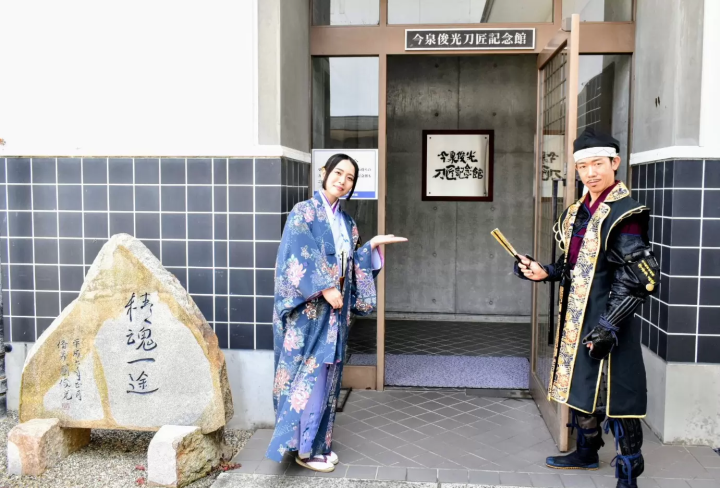
Swordsmith Imaizumi Toshimitsu (deceased) is said to be the founder of the Bizen sword revival. He opened a sword forge in Osafune in 1945 (Showa 20) and engaged in full-scale sword-making research, focusing on traditional Bizen swords, reviving the Bizen Osafune sword, which was in danger of decline.
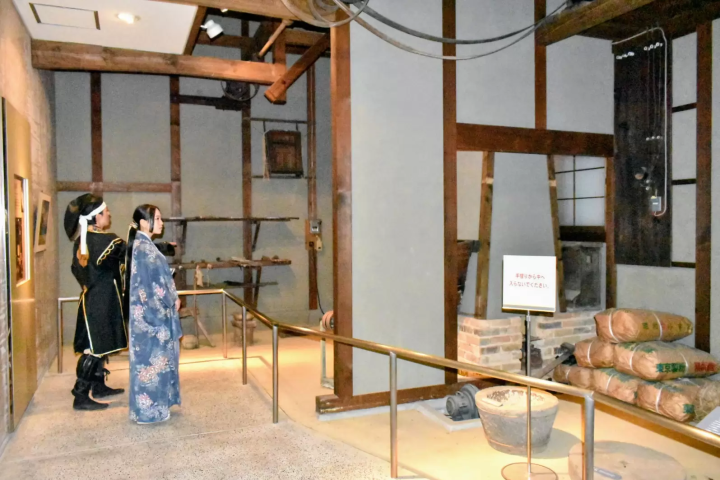
He is a swordsmith who is highly regarded as a cultural presence, continuing to pass on his techniques to the present day, and through his ingenuity in the materials he creates, he has developed a unique style in his blade that evokes the flavor of the Kamakura period some 700 years ago. This memorial museum commemorates the achievements of swordsmith Imaizumi Toshimitsu, and displays many of his original tools.
Sword souvenir shop: Special items you can only buy here
① Fureai Bussankan: A must-see goods shop for sword fans
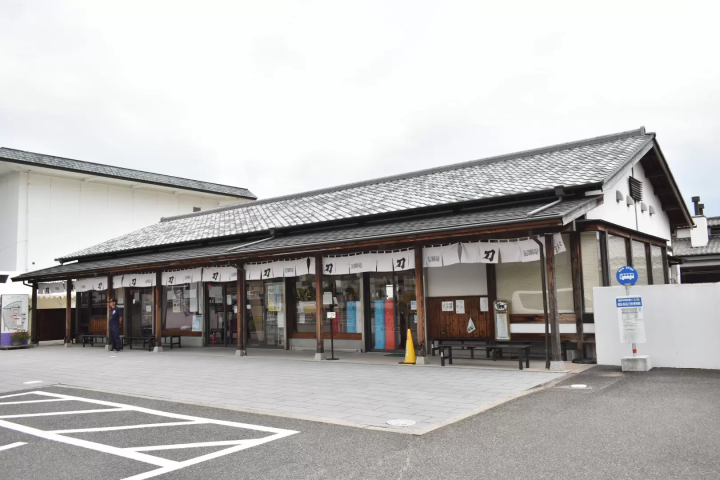
This souvenir shop is located on the grounds of Bizen Osafune Sword Village. It mainly sells sword goods, and is popular for its sword goods that can only be purchased here, such as those related to the national treasure "Sanchomo (National Treasure Sword)."
The shop is filled with products that are completely different from those found in ordinary souvenir shops, including souvenirs related to samurai and warriors, local specialties of Setouchi City, sword bags and sageo (strings used to fasten swords to the waist), and even powder, sword oil, and wiping paper for sword maintenance.
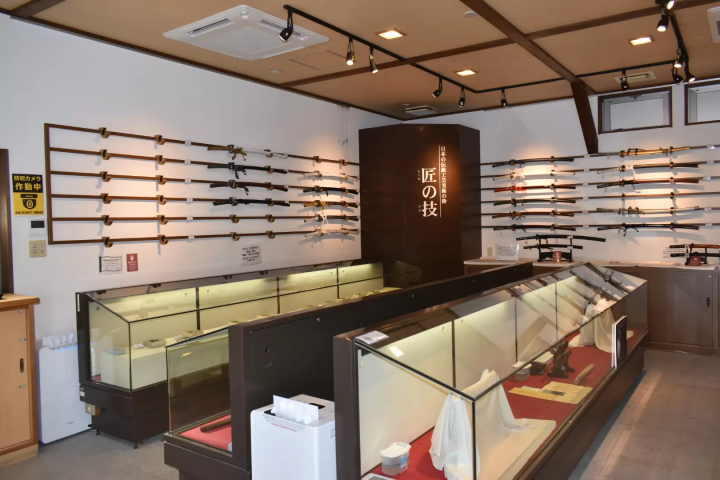
A special sword corner has just opened in the next room. Here, replica swords are lined up on the wall, and they even sell real swords (modern art swords and antique swords). It's truly a sword gallery. If you come to the Sword Museum and then come here, you can even buy a real sword!
What caught my eye were the "Sword Materials Gacha" and the "Monocular Sword Sanchomo (National Treasure Sword)" instead of a monocular. For sword lovers, it's a fun shop to just look around!
Address: 966 Okayama Prefecture , Setouchi City, Okayama Prefecture
TEL: 0869-66-7550
Business hours: 9:00-17:00
Closed: Mondays (or the following day if Monday is a public holiday), December 28th to January 4th, and when changing exhibits at the Sword Museum
Irie Miyamoto: Tamahagane (Japanese steel) jewelry and Nishijin-ori goods
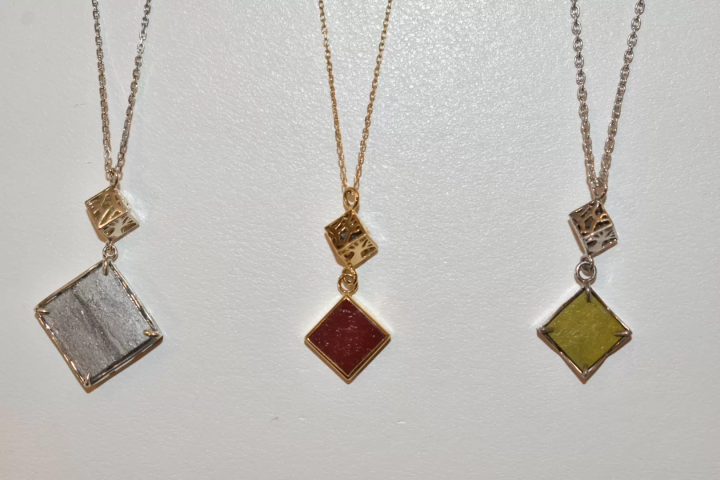
This shop, which sells jewelry, glasses, and kimonos near the Bizen Osafune Japanese Sword Museum, has been selling jewelry made from tamahagane, the material used to make Japanese Tamahagane (Japanese steel), since August 2022.
It seems that fusing different materials was extremely difficult, but after repeated trial and error, the swordsmiths at the Bizen Osafune Japanese Sword Museum forged the steel from Tamahagane (Japanese steel), the lacquerers applied the lacquer, and the jewelry craftsmen meticulously processed it so that it could be worn on a daily basis. In other words, the techniques of sword-making are packed into this small piece of jewelry.
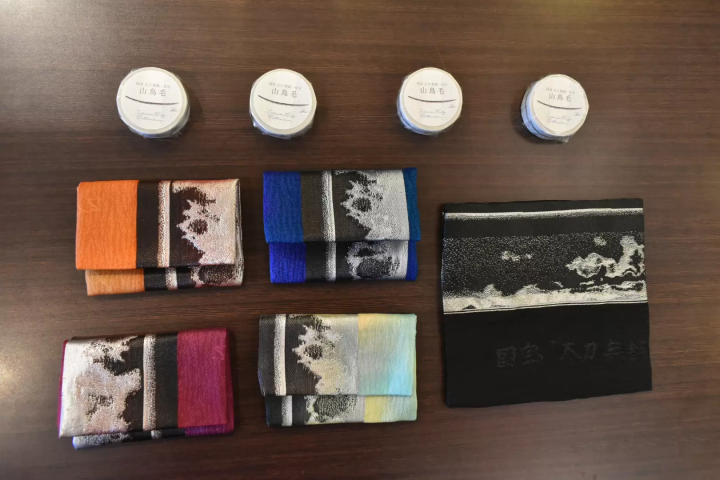
Another popular item is a collaboration with the National Treasure "Tachi Mumei Ichimonji (Sanchomo (National Treasure Sword) )" sword, featuring a Sanchomo (National Treasure Sword) blade pattern obi (sash) made from Kyoto brocade. This shop is filled with exquisite items that sword lovers will want to own. A new product, a Sanchomo (National Treasure Sword) cushion, has also been released.
Address: 94-1 Okayama Prefecture, Setouchi City, Okayama Prefecture
TEL: 0869-22-0206
Business hours: 10:00-19:00
Closed: Wednesdays and Thursdays
Summary: A unique place where you can experience everything about Japanese swords

What did you think after touring the Bizen Osafune Japanese Sword Museum? It was truly a fascinating place that covered everything related to swords!
It's heaven for sword fans because it's the only place in Japan where you can see all the craftsmen and see swords being made at any time.
It is also the perfect place for those who want to learn more about swords or are interested in swords. The Bizen Osafune Japanese Sword Museum also offers hands-on classes such as knife making, paper knife making, and Japanese sword maintenance.
Please come and visit Osafune, known as the holy land of Japanese swords and the village of swords.
[Bizen Osafune Japanese Sword Museum]
Address: 966 Okayama Prefecture , Setouchi City, Okayama Prefecture
TEL: 0869-66-7767
Business hours: 9:00-17:00
Closed: Mondays (if a holiday, the next weekday), the day after a public holiday (excluding Saturdays and Sundays), New Year's holidays (December 28th to January 5th), and when changing exhibits
The contents on this page may partially contain automatic translation.