


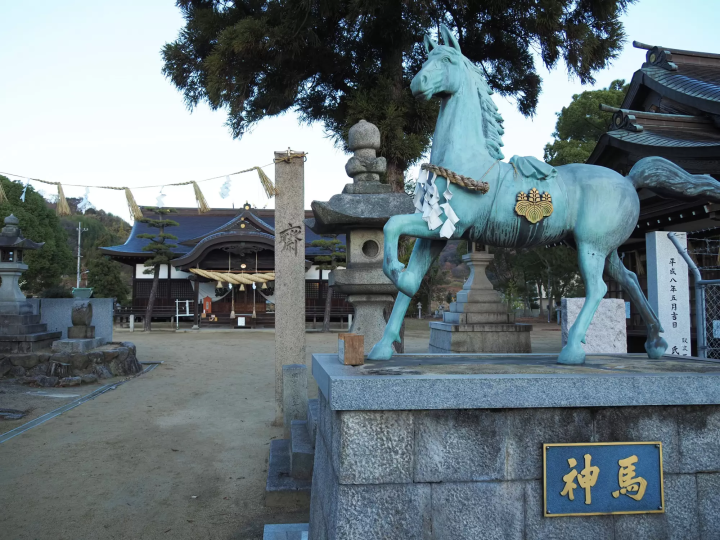
In the Year of the Horse, we highly recommend you visit Oura Shrine in Asakuchi City, Okayama Prefecture Prefecture. This horse-related shrine is rare nationwide, and holds the traditional "Keiba Shinji" (horse racing ritual) that has been held for over 460 years.
2026.01.07-
Table of Contents
- The 460-year-old tradition of horse racing
- A shrine building filled with legend and history
- Let's walk around the temple grounds
- Gifts given for the Year of the Horse
The zodiac sign for 2026 is the horse. Since ancient times, the powerful galloping horse has been cherished as the vehicle of the gods and has been a symbol of good fortune and progress.
In the Year of the Horse, you should definitely visit Oura Shrine in Yorishima-cho , Asakuchi City. This horse-related shrine is rare nationwide, and has a horse racing ritual that has been held for over 460 years.
The 460-year-old tradition of horse racing
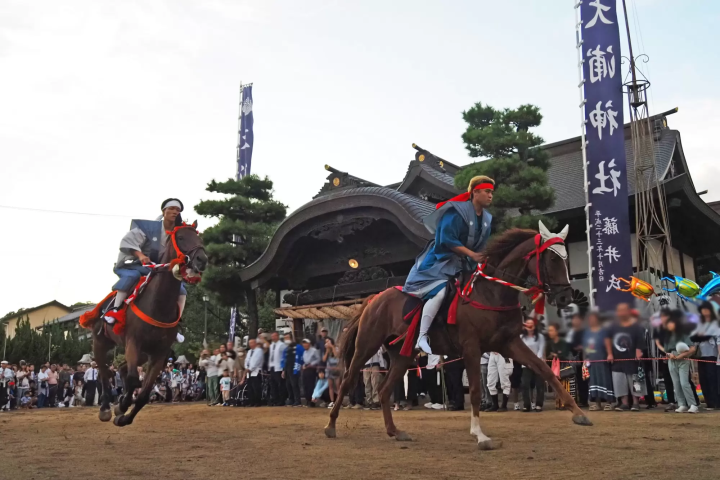
Oura Shrine is famous for the horse racing ritual that is dedicated at the autumn festival held on the first Sunday of October every year.
In 1559 during the Sengoku period, when Hosokawa Michitada moved the shrine from the sacred ground of Saburojima to its current location, he had 40 sacred horses (20 from the Jito clan and 20 from the Ryoke clan) participate in a sacred procession, which is said to be the beginning of the horse racing ritual.
Currently, one sacred horse each from the Jito and Ryoke stocks is used in horse racing rituals.
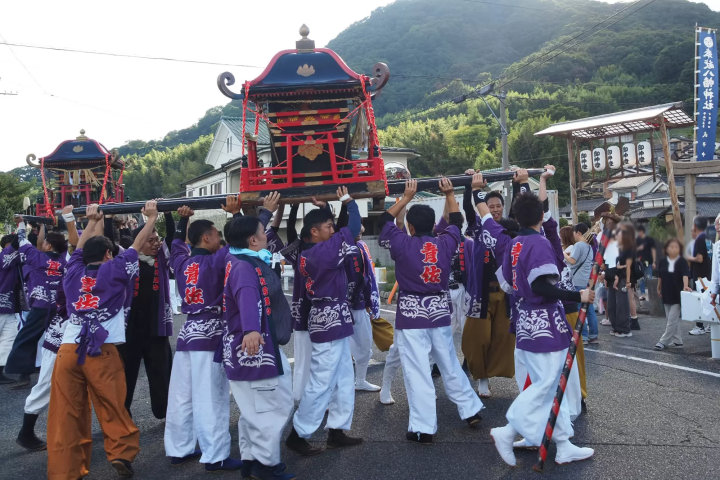
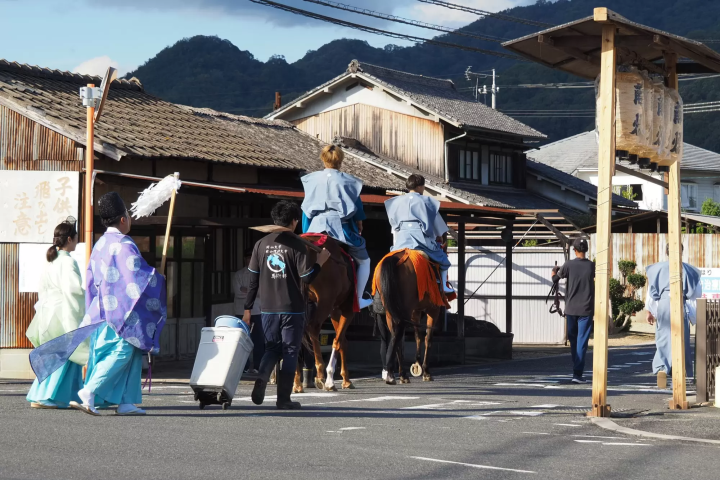
On the day of the festival, two sacred horses join the "Shinko Procession" in which a portable shrine carrying the god goes around town.
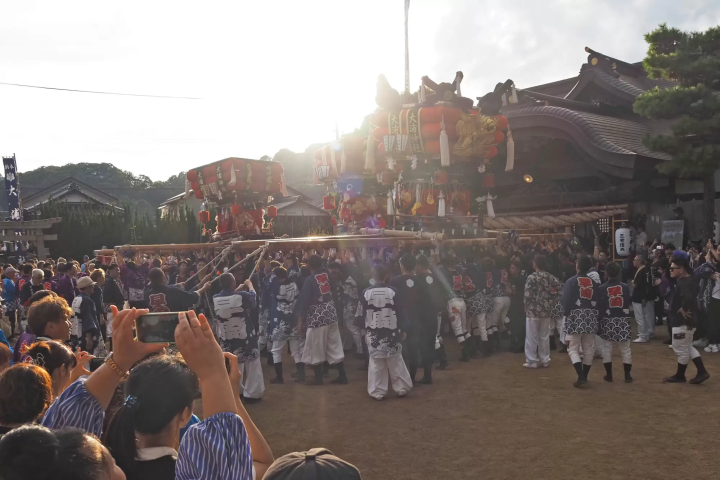
When the procession returns to the shrine in the evening, the festival reaches its climax. The shrine is paraded through the packed shrine grounds in a vigorous procession known as the "Surfing Ritual," where the mikoshi drags along the ground. The "Chitose-raku" and the boat-shaped float "Mifune" are also paraded along with spirited chants.
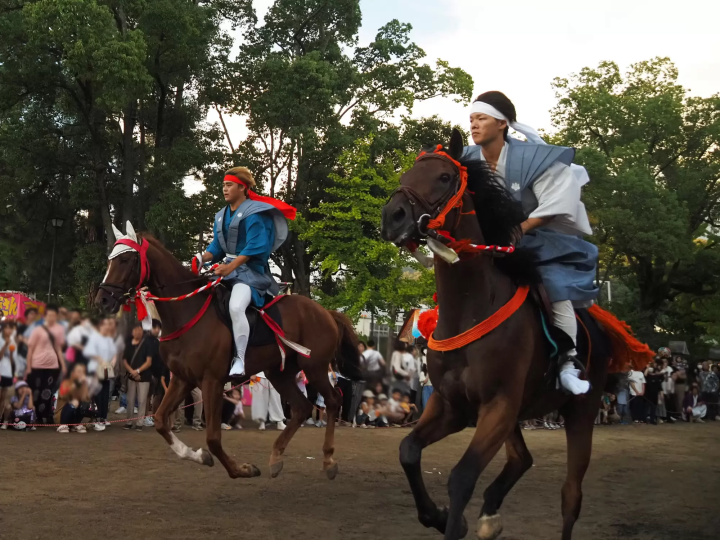
The final offering is the Juni-Kake Horse Racing Ceremony, in which two sacred horses gallop at full speed in front of the spectators a total of 12 times.

A shrine building filled with legend and history
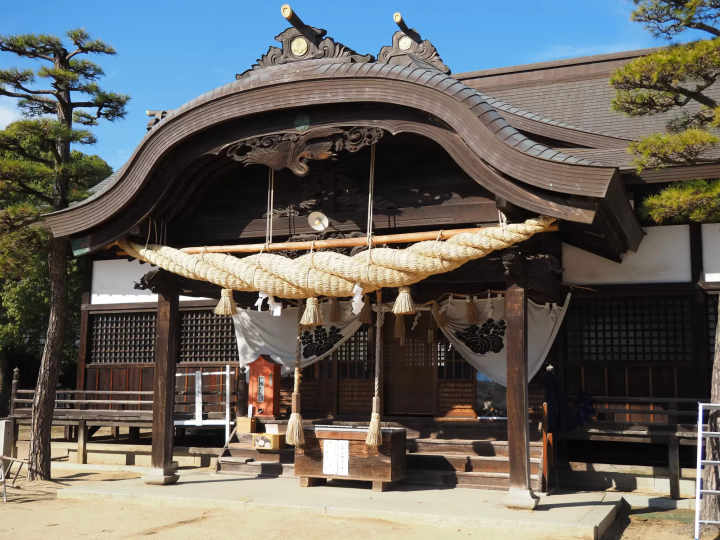
According to the shrine's records, the origins of Oura Shrine date back approximately 1,800 years. It is said to have begun when Empress Jingu (a legendary empress of ancient Japan) stopped off on her way back from an expedition, and this is also the origin of the place name "Yorishima."
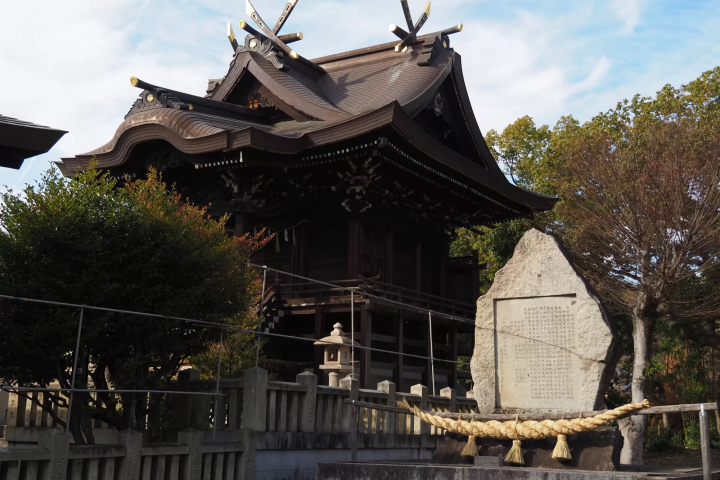
It has been passed down that Abe no Seimei, an onmyoji (fortune teller and magician), visited Saburojima and enshrined the three gods Emperor Ojin, Emperor Chuai, and Empress Jingu on a site overlooking Mt. Mitsuyama.
It is said that in 1559 during the Sengoku period, Hosokawa Michitada moved the Hachiman Shrine from Saburojima to its current location in order to seal off the demon's gate (the northeast direction, believed to be the direction from which bad luck enters) of Aosayama Castle.
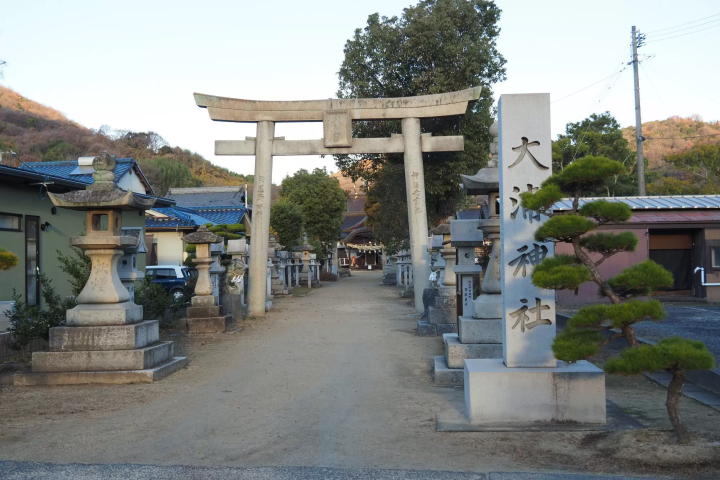
The current shrine buildings, including the main hall, the prayer hall, the offering hall, the worship hall, and the large torii gate, have been designated as "Registered Tangible Cultural Properties" (important structures recognized by the government). Visiting the site will leave you feeling a sense of solemnity.
New large shimenawa
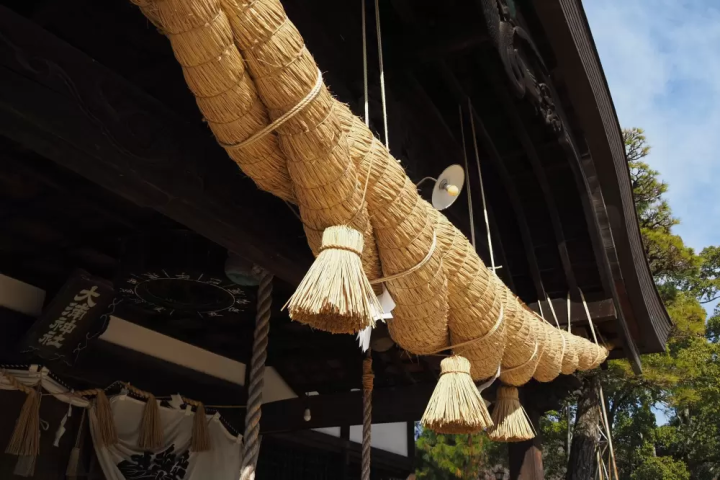
The worship hall is decorated with a new "O-shimenawa" (large rope marking sacred places) that was just made in December 2025.
The ceremony was carried out by artisans and local shrine representatives using the traditional method of using rice straw in order to preserve the tradition.
When you visit, be sure to experience the impressive beauty of the craftsmanship up close.
Let's walk around the temple grounds
The horse racing ritual is only held during the autumn festival, but there are many horse-related spots scattered around the shrine grounds.
As you walk along the approach to the shrine, you will be greeted by a statue of a sacred horse. Its dynamic appearance, as if it is about to take off, is likely to become a popular photo spot for praying for success in the new year.
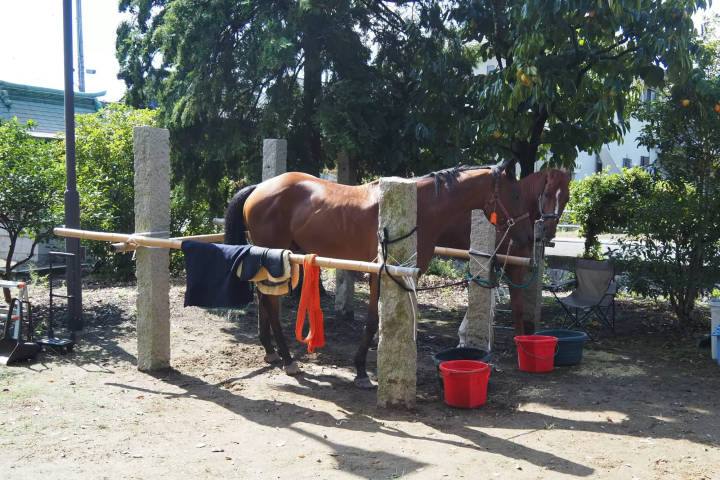
The stone pillar on the west side of the main shrine has long been used to tie up the sacred horses waiting to take part in religious ceremonies.
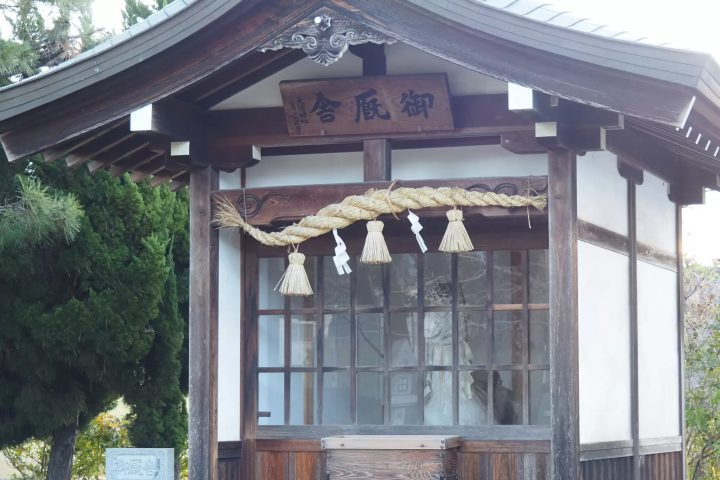
If you look into the "Imperatorium" (horse stable), you will see a statue of a Hakuba standing quietly.
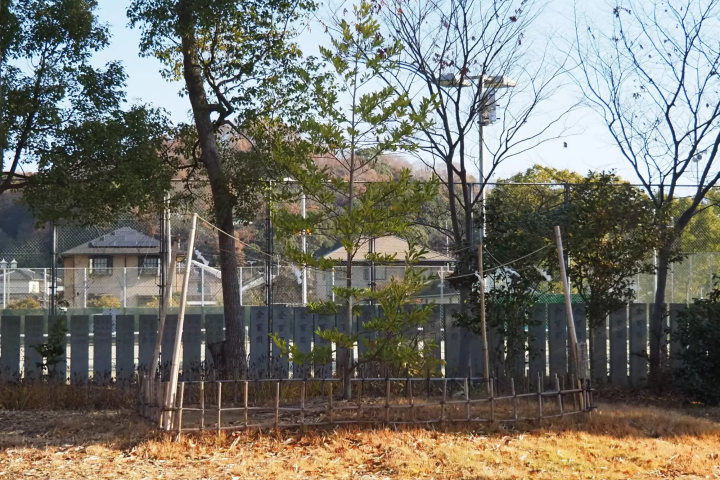
This sacred tree, known as the "Tree of Invitation," is a sacred tree that appears in the legend of Ama-no-Iwato (a famous story in Japanese mythology), and has a dignified appearance.
Gifts given for the Year of the Horse
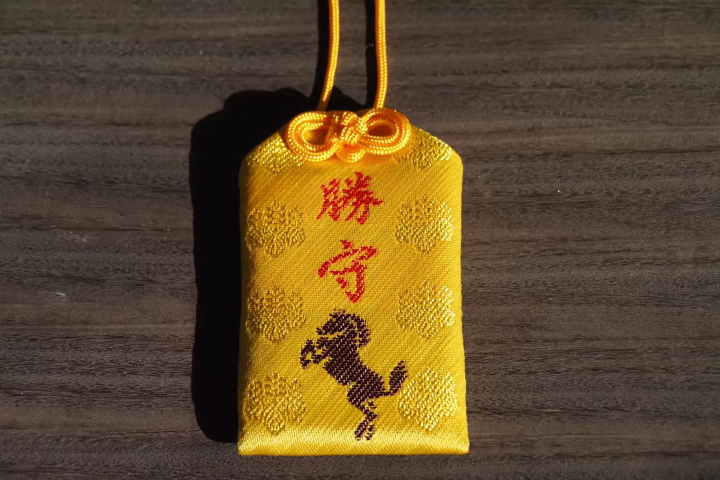
After praying, be sure to pick up some gifts (amulet charms and red seals) that are unique to a shrine associated with horses.
This shining golden charm features a picture of a galloping horse. It is recommended for those who wish to be blessed with good fortune in competitions, exams, business, matches, illness, love, and other crucial situations.
In addition, a talisman made from the "sash" (a cloth worn diagonally across the shoulder) worn by jockeys in horse racing rituals will also be given out in the New Year. In addition to bringing good luck in competitions, it has long been used as a "belly band" worn by pregnant women, and is therefore known as a talisman for praying for easy childbirth.
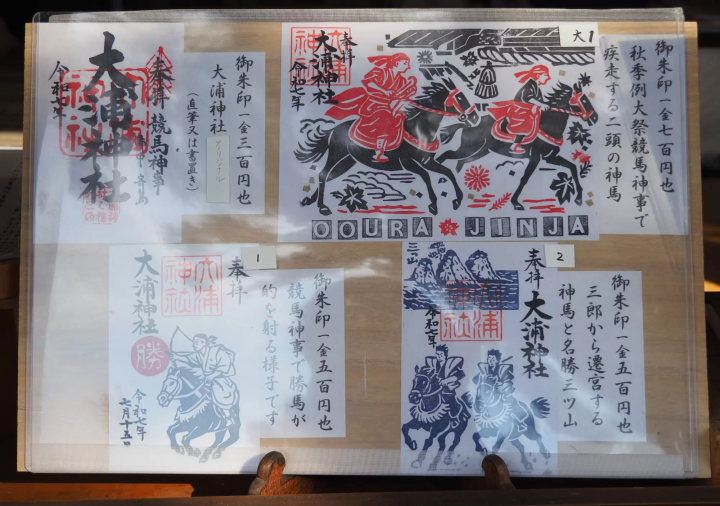
Elaborately designed goshuin (souvenirs with the shrine's seal and date written on them) are popular, including those depicting scenes from horse racing rituals and those featuring the " Hakkeshisou" (a rare red plant) that is a specialty of Yorishima.
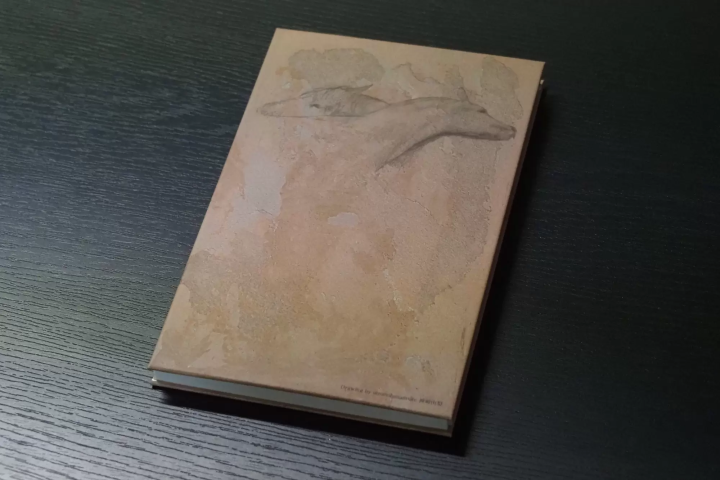
Additionally, in 2026, an original goshuincho (stamp book) featuring a beautiful depiction of two horses will be released.
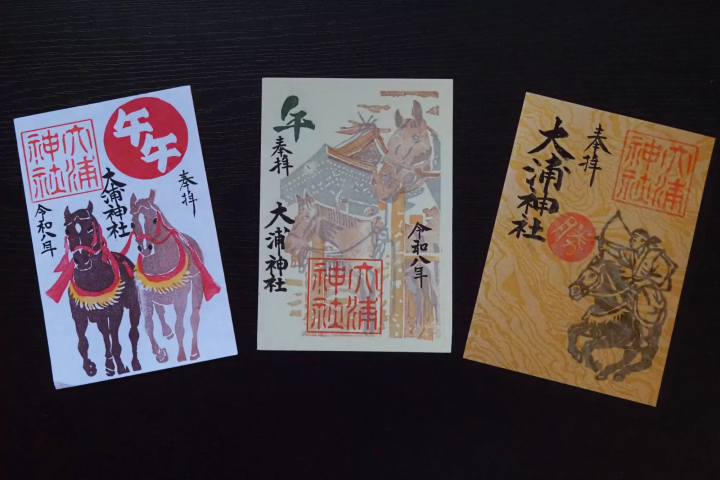
Three gorgeous new Year of the Horse special goshuin stamps will be available for the New Year.
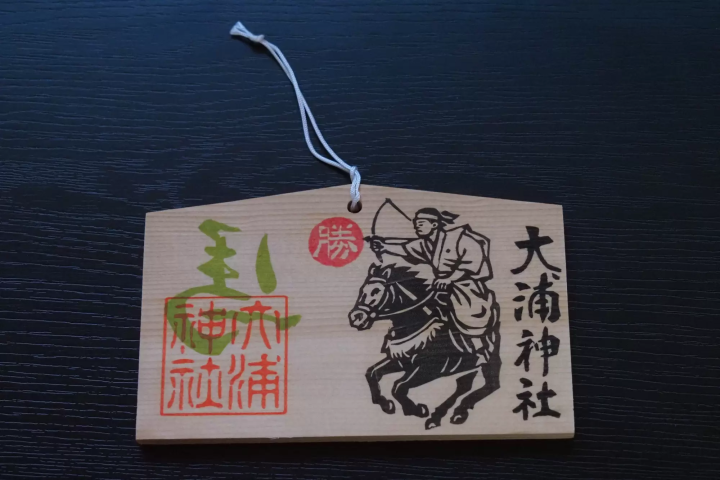
This is a New Year's limited edition ema, depicting an auspicious left-handed horse (the character for "horse" is reversed).
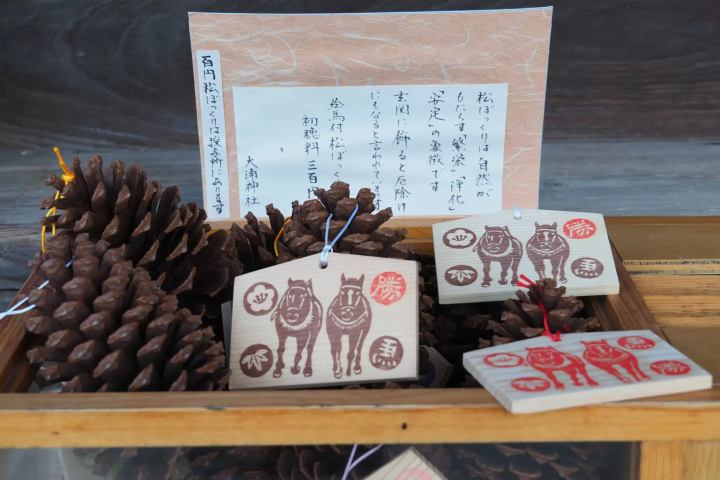
The ema, which is not exclusive to New Year's, features two horses.
You can also see pine cones that have fallen from the large pine tree in the temple grounds being offered along with votive plaques.
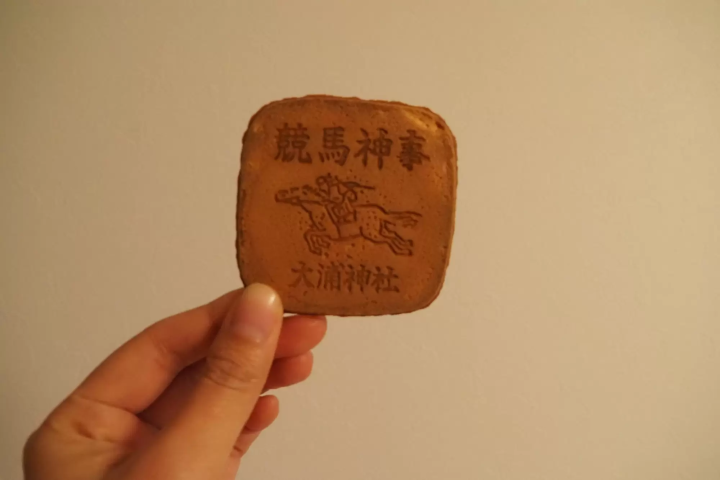
Tamago senbei (egg-flavored cookies) are branded with a galloping horse. They have a slightly sweet and crunchy texture and are the perfect souvenir for your visit to the shrine.
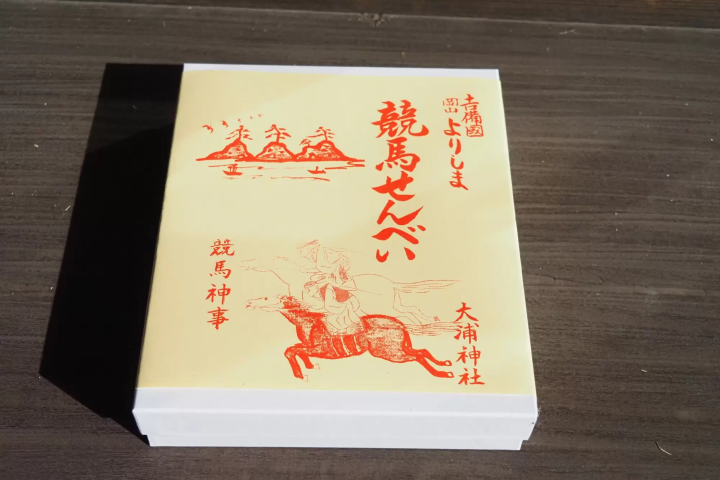
The packaging depicts the former appearance of Mitsuyama, with pine trees growing on each rock.
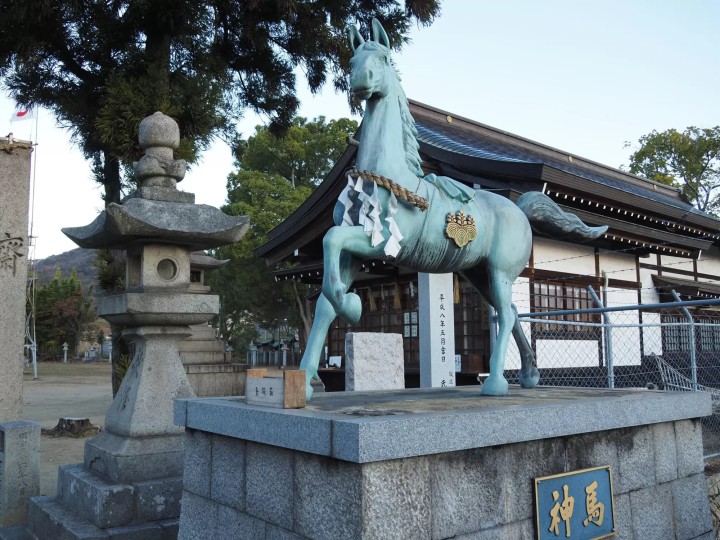
2026 will be a year of great leaps, where we will gallop with the strength and agility of a horse.
At the start of the Year of the Horse, why not visit Oura Shrine in Okayama, Okayama, to receive good fortune?
[Oura Shrine]
Address: 7756 Okayama Prefecture , Asakuchi City, Okayama Prefecture
TEL: 0865-54-2408
Parking: Available


![A 398-meter long corridor!? The inspiration for the Momotaro legend!? [Kibitsu-jinja Shrine]](https://resources.matcha-jp.com/resize/200x2000/2024/12/27-217410.webp)

The contents on this page may partially contain automatic translation.