


Discover Northern Okayama, where contemporary art meets pristine nature. Explore Makido Cave, Nagi MOCA, local cuisine, and historic castle towns.
2026.11.09Art Explorations in Okayama’s Mountainside
How long has it been since you last truly enjoyed art—unhurried, allowing yourself to revel in the discoveries and changes it can inspire?
When given time to work its magic on our senses, art offers far more than an aesthetic experience. It can open a window onto the place we are visiting, revealing layers of history and culture that deepen our understanding of both the artwork and its surroundings. Genuine encounters with art leave us changed—our perspective broadened, our inner world enriched by everything that art has enabled us to see.
For art lovers seeking an escape from crowded museums and galleries, Japan’s site-specific art festivals provide a refreshing alternative. The Forest Festival of the Arts Okayama, gearing up for its second edition in 2027, goes beyond standard exhibitions. It invites visitors to experience local culture and discover how art, nature, and everyday life breathe new energy into each other.
Okayama is already known as a vibrant art destination—serving as the gateway to the Setouchi Triennale via Uno Port, showcasing public art along the boulevard from Okayama Station to Korakuen Garden, and celebrating a rich lineage of traditional craft, from Bizen ceramics and Kurashiki glass to colorful masking tape.
As the inland companion to the sea-based Setouchi Triennale, the Forest Festival of the Arts Okayama unfolds across the mountainous landscape of northern Okayama. Select installations from the inaugural 2024 edition remain on display, offering a sneak peek before the festival returns for its second edition: Forest Festival of the Arts Okayama: Clear-skies Country 2027.
Read on to explore the festival’s most captivating venues, their key highlights, and what makes them must-visit destinations both now and during the 2027 festival.
-
Table of Contents
- The Forest Festival of the Arts Okayama: Concept and Overview
- Makido Cave: A Breathtaking Natural Monument in Niimi
- Manabi no Mori Niimi Library: Art Meets Daily Life
- Tsuyama Ping Pong Platz: Art, Play, and a Historic Castle Town
- Nagi MOCA (Museum of Contemporary Art): From Cosmic Art to Community Life
- Previewing 2027: The Art Journey Begins This Autumn
The Forest Festival of the Arts Okayama: Concept and Overview
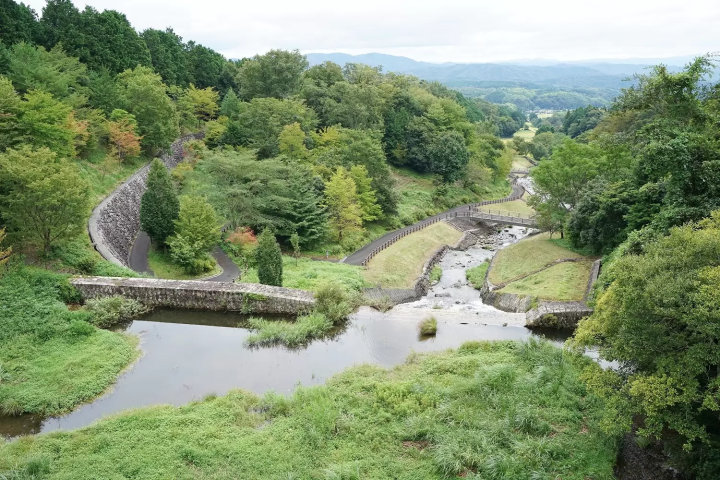
Forest Festival of the Arts Okayama: Clear-skies Country is an international art festival held across 12 municipalities in northern Okayama Prefecture. What these communities share is a mountainous landscape that has shaped local culture over generations, giving rise to distinctive cuisine, ways of life, and traditions—including shrine festivals—that are unique to the region.
There is a Japanese word that captures the relationship between these communities and their natural surroundings: Satoyama. The term refers to the landscapes where human settlements (sato) meet the foothills and mountains (yama). These areas form a mosaic of rice paddies, managed forests, irrigation ponds, and grasslands, all closely intertwined with everyday human life.
This region, where satoyama culture still thrives, hosted the first Forest Festival of the Arts Okayama: Clear-skies Country in 2024, inviting visitors to reconnect with the region’s forests, nature, and culture. Building on this legacy, the 2027 festival, held from September 18 to November 23, will explore the theme “A Becoming Forest”—evoking a forest that is constantly changing and gradually growing toward a better future. Through a series of projects rooted in the region’s landscapes and culture, the festival aims to foster new connections between people and nature, culture and everyday life, while preserving these resources for future generations.
Below, we introduce several of the festival venues, highlighting long-term installations from the first edition alongside the landscapes, communities, and local culture that inspired them.
Makido Cave: A Breathtaking Natural Monument in Niimi
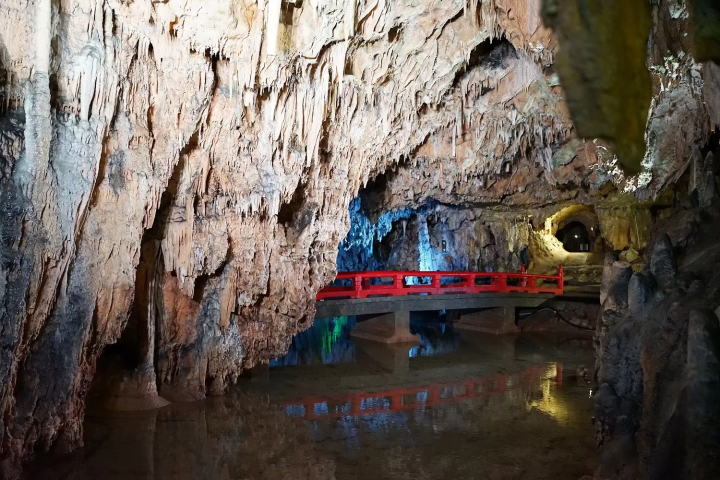
Makido Cave, a 450-meter-long limestone cave designated as an Okayama Prefecture Natural Monument, is a must-visit attraction in Niimi City. Though the local mountains are rich with limestone formations, Makido—along with nearby Ikurado—offers the region's best fully accessible cave experience. Legend has it that local hunters first discovered Makido during the Edo period while chasing raccoon dogs—which explains the tanuki statues welcoming visitors at the entrance.
The cave captured major headlines in 2024 when it hosted an art installation by Mika Ninagawa with EiM. Illuminated year-round by vibrant LEDs, Makido Cave radiates an otherworldly charm.
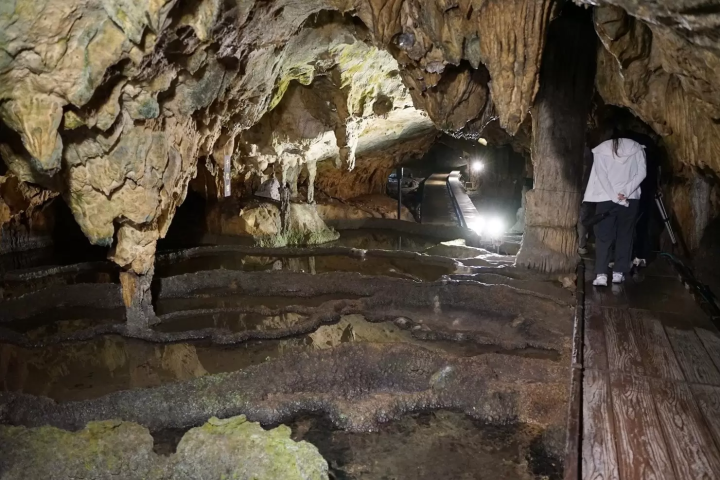
The cave’s photogenic highlights include the Senmaida (a geological formation resembling terraced rice paddies), the Ryugu Bridge (a vibrant vermillion bridge spanning a subterranean lake), and the Lovers' Fountain—the ultimate romantic photo spot.
Visitors can listen to explanations of each highlight using an audio guide, accessible by connecting to the cave's Wi-Fi and scanning a QR code.
During the winter season, guided caving tours are held at Makido, giving adventure seekers the opportunity to explore uncharted areas of the cave. Please check the official Niimi City tourist website for details.
Whether you visit during the art festival or any other time of year, Makido Cave will leave you in awe of the power of nature, which shapes majestic underground monuments across centuries and millennia.
Makido Cave: Visitor Information
Admission Fees
-Adults (High School and above): 1,000 yen
-Junior High School Students: 800 yen
-Children (Elementary): 500 yen
-Preschoolers: Free
Access: From JR Ikura Station, take the local bus bound for Makido to the final stop (approximately 40 minutes).
Manabi no Mori Niimi Library: Art Meets Daily Life
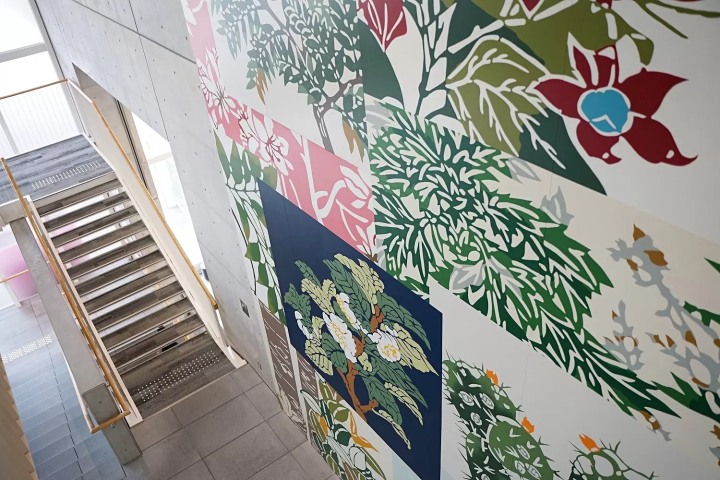
Another site carrying the legacy of the Forest Festival of the Arts Okayama is the Niimi City Central Library (Manabi no Mori Niimi Library)—a modern, stylish space where daily civic life intersects with art.
Spanning the grand staircase wall near the entrance, Michael Lin’s 《Standard Color 2024》 immediately catches the eye with its vibrant, plant-inspired motifs. The piece becomes all the more fascinating through its local roots: during his explorations of Niimi, Lin discovered a historic textile shop's notebook filled with drawings of regional plants used as natural dyes. Reimagining these delicate designs on a monumental scale for a public venue, Lin transforms local cultural memory into an enduring feature of everyday community life.
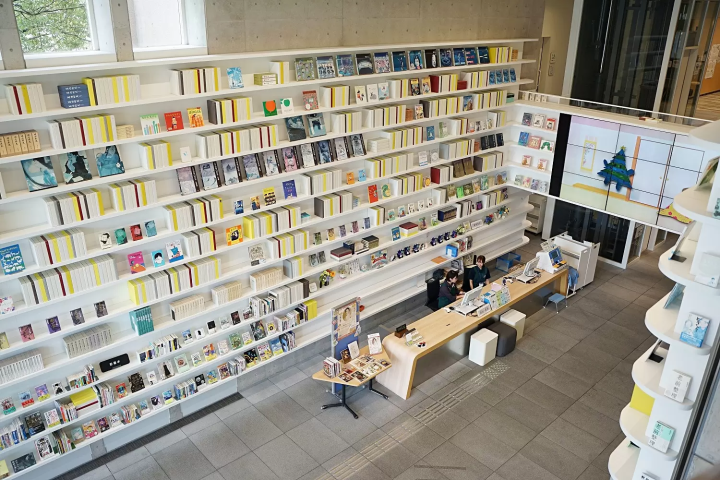
Open to all visitors, the library has an extensive collection of art books and visual albums that can be enjoyed without needing to read Japanese, as well as a selection of foreign-language books. Families traveling with little ones shouldn't miss the charming children’s book corner on the second floor.

With every book placed within easy reach and comfortable seating nestled among the shelves—some facing sweeping mountain views—the space is wonderfully welcoming. It is the kind of quiet sanctuary where you will easily want to spend hours, reconnecting with yourself through art and books.
Manabi no Mori Niimi Library: Visitor Information
Hours: 9:00 AM – 7:00 PM (Closed Mondays)
Access: From JR Niimi Station (Hakubi Line), take the local bus for approximately 10 minutes and get off at the Chuo Library (Chuo Toshokan) stop.
Yakiniku Chiyagyu: Taste Chiya Beef, a Specialty of Niimi
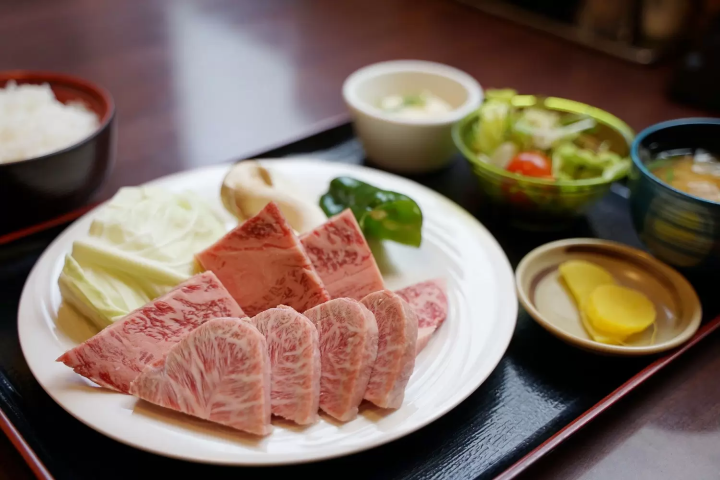
A trip to Niimi would not be complete without sampling Chiya Beef, the city's pride and joy. Born in Niimi, Takenotani-tsuru, Japan's oldest pedigree cattle lineage, is said to have spread nationwide and become the foundation of modern Wagyu. Famous for its balanced marbling and lean meat, Chiya Beef is exceptionally tender and rich in flavor.
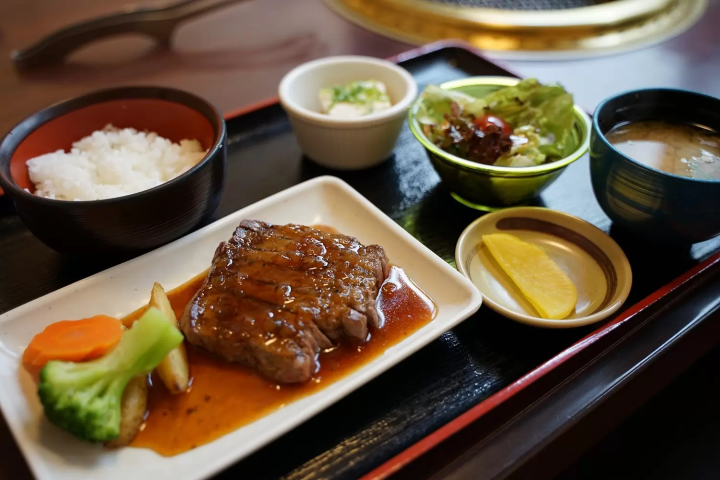
For an authentic taste, visit Yakiniku Chiyagyu, a specialized Japanese BBQ restaurant operated by the local agricultural cooperative (JA Harenokuni Okayama Ashin). Farm-fresh cuts are served across a range of popular dishes—from tabletop yakiniku (table-side grilled meat and vegetables) and tender steaks to gyudon (beef rice bowls) and hearty Stamina Teishoku stir-fries.
We ordered the Yakiniku Set Meal and loved the ritual of grilling the beef at our table. The aroma alone builds wonderful anticipation, and the result is divine—melt-in-your-mouth tenderness with a balanced, rich flavor that doesn’t feel too heavy.
Located right next to a local farmers' market, Yakiniku Chiyagyu offers a welcoming, casual atmosphere. After your meal, be sure to browse the market for fresh seasonal produce—especially Niimi's celebrated Pione grapes if they are in season!
Yakiniku Chiyagyu
Lunch: 11:00 AM – 2:00 PM (Last order: 1:40 PM)
Dinner: 4:30 PM – 9:00 PM
Closed: Tuesdays
Tsuyama Ping Pong Platz: Art, Play, and a Historic Castle Town
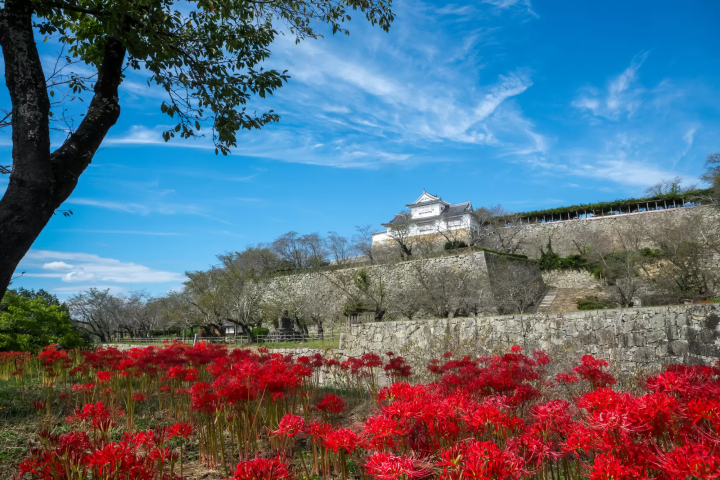
History and art lovers should definitely include Tsuyama in their itinerary. The city grew around the base of Tsuyama Castle before thriving as a key post town along the Izumo Kaido—a historic highway that connected Himeji to the legend-rich Izumo region on the Sea of Japan coast.
Today, preserved historic districts blend seamlessly into Tsuyama’s modern cityscape. Lined with elegant, long-standing shops and dining spots, the city stays remarkably true to its samurai-era heritage—a legacy proudly reflected in the warmth and refinement of the locals.
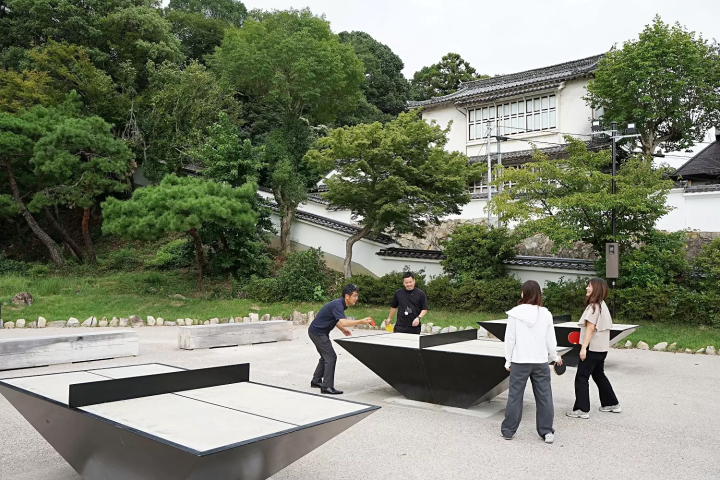
Directly outside the entrance to Tsuyama Castle lies the《Tsuyama Ping-Pong Platz》, a permanent outdoor installation by artist Giacomo Zaganelli from the 2024 Forest Festival of the Arts Okayama. The plaza features three ping-pong tables available for anyone to use. Paddles and balls can be borrowed free of charge from the nearby Tsuyama Natural Science Museum ticket office.
Crafted in collaboration with local artisans, the tables are built using iron and concrete, paired with benches made from regional timber. As a piece of "participatory art," the installation is best experienced by playing. It serves as a vibrant community hub where locals of all generations and visitors can connect through sport, bypassing language barriers entirely.
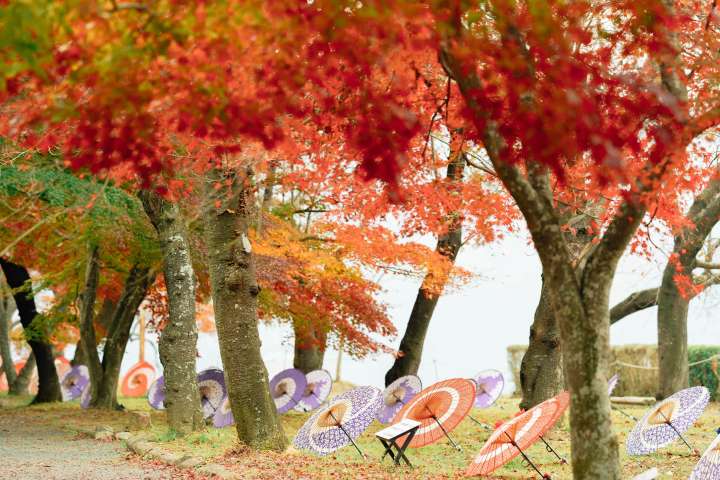
This contemporary art installation and the historic castle town coexist in spontaneous harmony. We highly recommend combining a game of ping-pong with a stroll through Kakuzan Park, home to the remains of Tsuyama Castle. Built over four centuries ago, the site is renowned as one of Japan’s premier cherry blossom destinations, where a sea of pink blooms frames the towering stone walls. The park is just as breathtaking in autumn, when vibrant fall foliage transforms the landscape into a tapestry of warm colors.
Tsuyama Ping-Pong Platz
Access: About a 10-minute walk from JR Tsuyama Station
Nagi MOCA (Museum of Contemporary Art): From Cosmic Art to Community Life
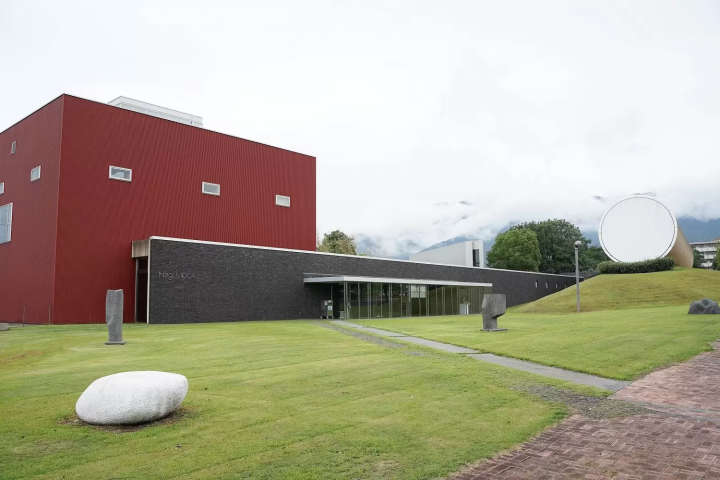
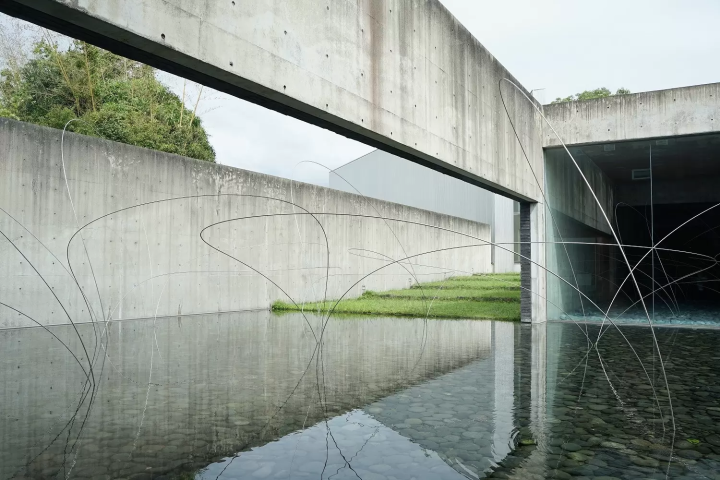
The town of Nagi is home to one of Japan’s most renowned contemporary art facilities: the Nagi Museum of Contemporary Art (Nagi MOCA). Designed by acclaimed architect Arata Isozaki and opened in 1994, the museum is best known for three permanent, site-specific installations that blur the line between art and architecture: The Earth, The Moon, and The Sun.
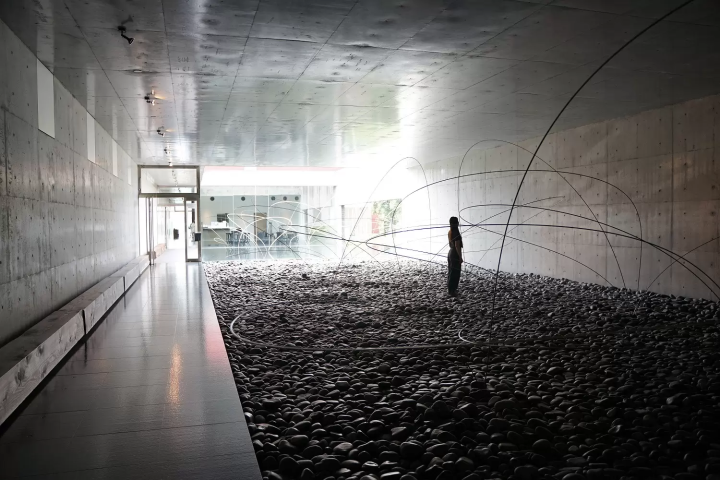
The Earth, created by Aiko Miyawaki, is a tranquil meditation on the unseen threads connecting the soil to the sky.
The Moon, designed by Kazuo Okazaki, features a crescent-shaped space aligned to catch the light of the Harvest Moon and the solstice sun. Its cavernous, high-ceiling interior creates an instant echo with every sound and step.
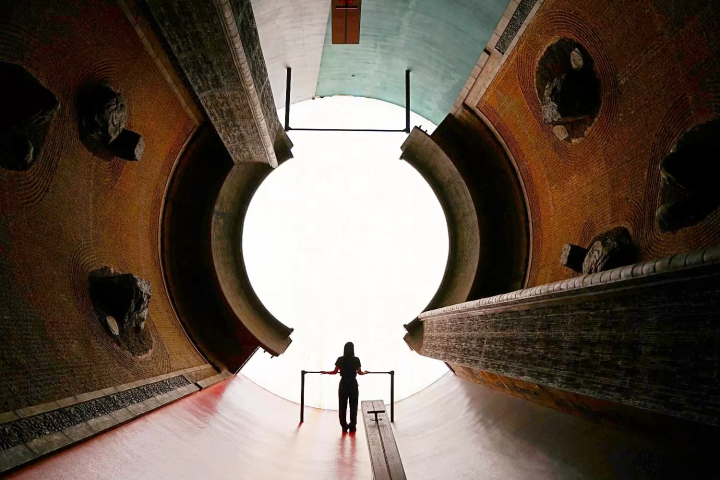
The Sun, crafted by the duo Shusaku Arakawa and Madeleine Gins, is a mind-bending space that challenges human perception. Reimagining the famous rock garden of Ryoanji Temple inside a tilted, symmetrical cylinder, the installation leaves you questioning up from down and left from right—a profound perceptual reset that stays with you long after you leave.
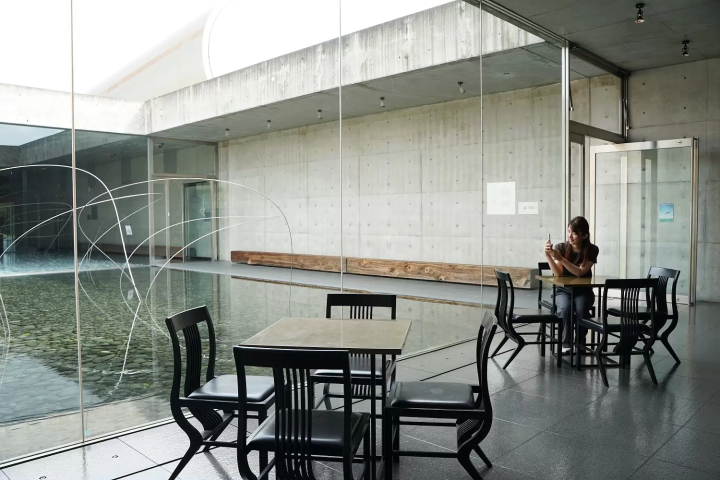
What makes Nagi MOCA especially appealing is its photography policy. Visitors are welcome to take photos and short videos throughout these surreal artistic spaces—offering a rare chance to capture truly one-of-a-kind shots.
These permanent installations were inspired by Nagi’s natural surroundings, particularly Mount Nagi. As a sacred peak linked to the creator deity Izanagi in Japanese mythology, the mountain serves as an enduring symbol of local culture and identity.
Beyond its permanent collection, Nagi MOCA hosts six to seven temporary exhibitions each year. This dynamic rotation ensures that returning visitors will always find something fresh to discover.
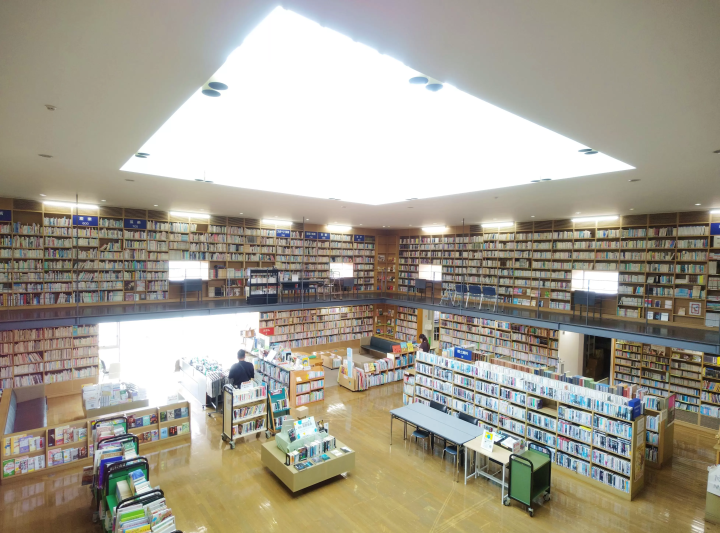
Nagi MOCA is also home to the Nagi Town Library, a free-entry public facility. Standing side-by-side, the museum and library together serve as a vibrant local hub for learning and creativity.
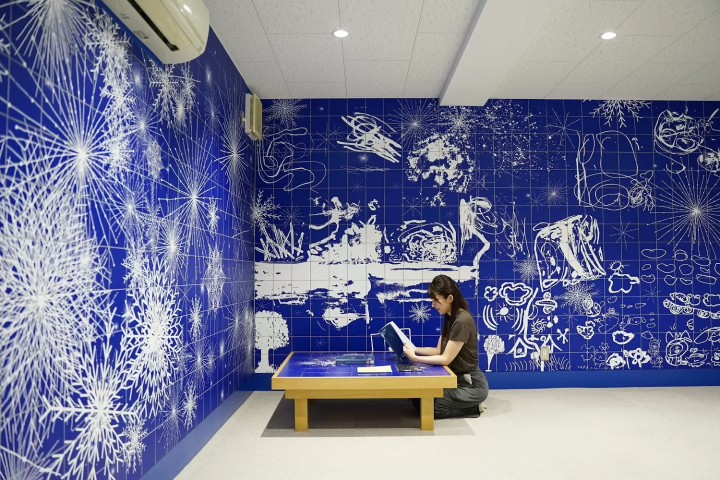
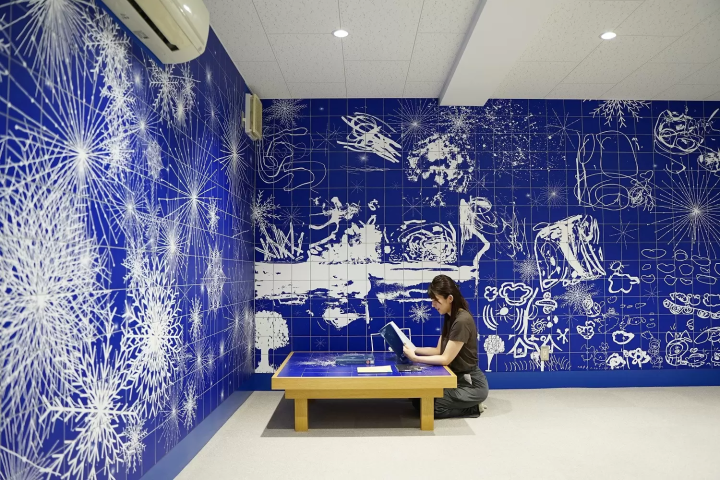
The children's reading room houses a permanent installation from the Forest Festival of the Arts Okayama: Sandra Cinto’s Cosmology for the Future. Inspired by Nagi’s reputation as a municipality with exceptional family and child-rearing support, Cinto created the mural with help from local children, integrating their original drawings into a sweeping artwork across two walls. The piece is both soothing and full of life, offering a mesmerizing reflection of the town's spirit and the broader universe.
We recommend taking your time at Nagi MOCA to fully immerse yourself in art. With a cozy café near the entrance and an excellent pizzeria just outside, it is easy to spend half a day—or even a full day—exploring the grounds.
Nagi MOCA: Visitor Information
Hours: 9:30 AM – 5:00 PM (Last admission 4:30 PM) *Closed Mondays
Admission:
-Adults and University Students: 700 yen
-High School Students: 500 yen
-Elementary and Junior High Students: 300 yen
Access: From JR Tsuyama Station, take the local bus bound for Namegata or Makuwa (~30–35 minutes), get off at Nagi Terrace, and walk about 5 minutes.
Nagisanroku Yamanoeki: Highland Flavors and Mountain Views
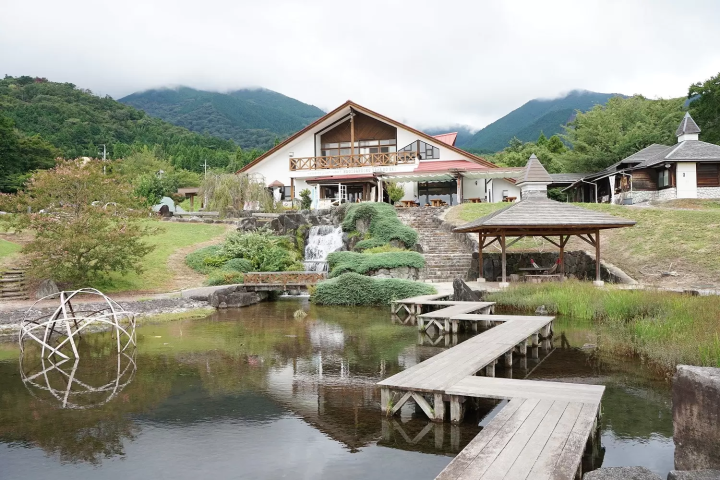
For a taste of local food and culture, stop by Nagisanroku Yamanoeki—a scenic mountain rest station and tourism hub at the foot of Mount Nagi. Featuring a farm-fresh restaurant, local market, souvenir shop, and cozy cottage accommodations, it serves as the ideal base camp for trekking Mount Nagi and exploring the surrounding highland nature.
A visit to the farmer’s market offers a chance to discover regional produce like satoimo (taro root).

Because Nagi experiences strong mountain winds, few crops thrive here, but satoimo is a hardy local favorite. At the adjacent restaurant, you can savor a hearty Japanese curry made with these locally grown potatoes.
Don't leave without sampling the flavorful treats from Osaji, a stand specializing in unique artisanal donuts. With inventive flavors like satoimo, tomato-fig, pumpkin, blueberry, spinach, and even bamboo charcoal, they offer a rich and memorable culinary experience.
The natural setting surrounding Nagisanroku Yamanoeki makes it well worth the trip. Perched above a dramatic gorge with architecture inspired by its natural environment, it is the perfect spot to recharge and soak in the majestic beauty of the mountains.
Previewing 2027: The Art Journey Begins This Autumn
The four destinations featured above—Makido Cave, Niimi Library, Tsuyama Ping-Pong Plaza, and Nagi MOCA—are just a few of the venues closely tied to the Forest Festival of the Arts Okayama. Long-term installations from the inaugural festival can also be discovered in Maniwa City, Kagamino Town, and across the broader region.
Each site reinforces the festival's core ethos: that art flourishes when interwoven with nature, history, and everyday life. These site-specific works could only exist here, deeply nourished by Okayama's local culture and scenery.
Start planning your visit for the 2027 Forest Festival of the Arts Okayama by checking the official website for updates on tickets, schedules, and event-specific transportation options.
In the meantime, you can experience Okayama’s artistic side during the Okayama Hareiro Campaign 2026 (September 5 – November 30), featuring seasonal art, local cuisine, and illuminated historic sites across the prefecture.
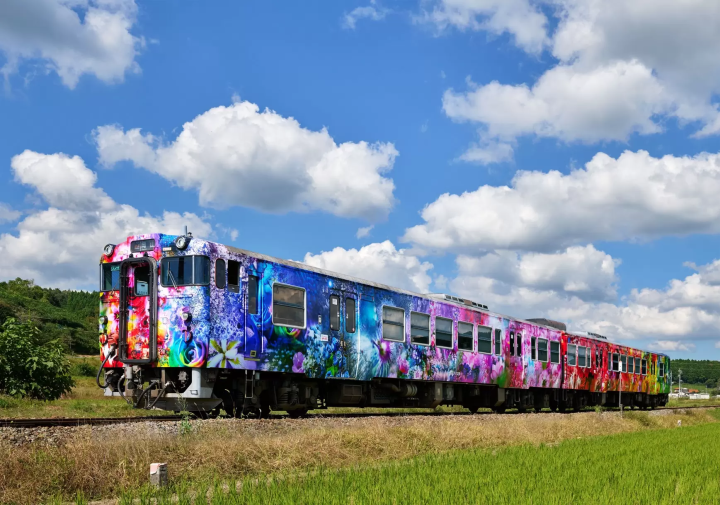
Key highlights include the autumn illuminations at Okayama Korakuen Garden and the Protopia-bound Train by Mika Ninagawa with EiM—an art-wrapped train running on the JR Tsuyama Line from October 10 as a preview for the 2027 Forest Festival of the Arts Okayama.
Visit the official campaign website for full details and plan your autumn getaway today!
A Message from the Executive Office of Forest Festival of the Arts, Okayama
Breathtaking limestone caves and historic castle towns become the stage for art. At the Forest Festival of the Arts, Okayama—a triennale where you can also enjoy hot springs and local cuisine—come experience a side of Japan found nowhere else. We look forward to welcoming you.
Forest Festival of the Arts Okayama: Clear-skies Country 2027: https://forestartfest-okayama.jp/en/
Okayama Hareiro Campaign 2026: https://www.okayama-japan.jp/en/27710
Okayama Prefecture Official Tourism Guide: https://www.okayama-japan.jp/en
The contents on this page may partially contain automatic translation.